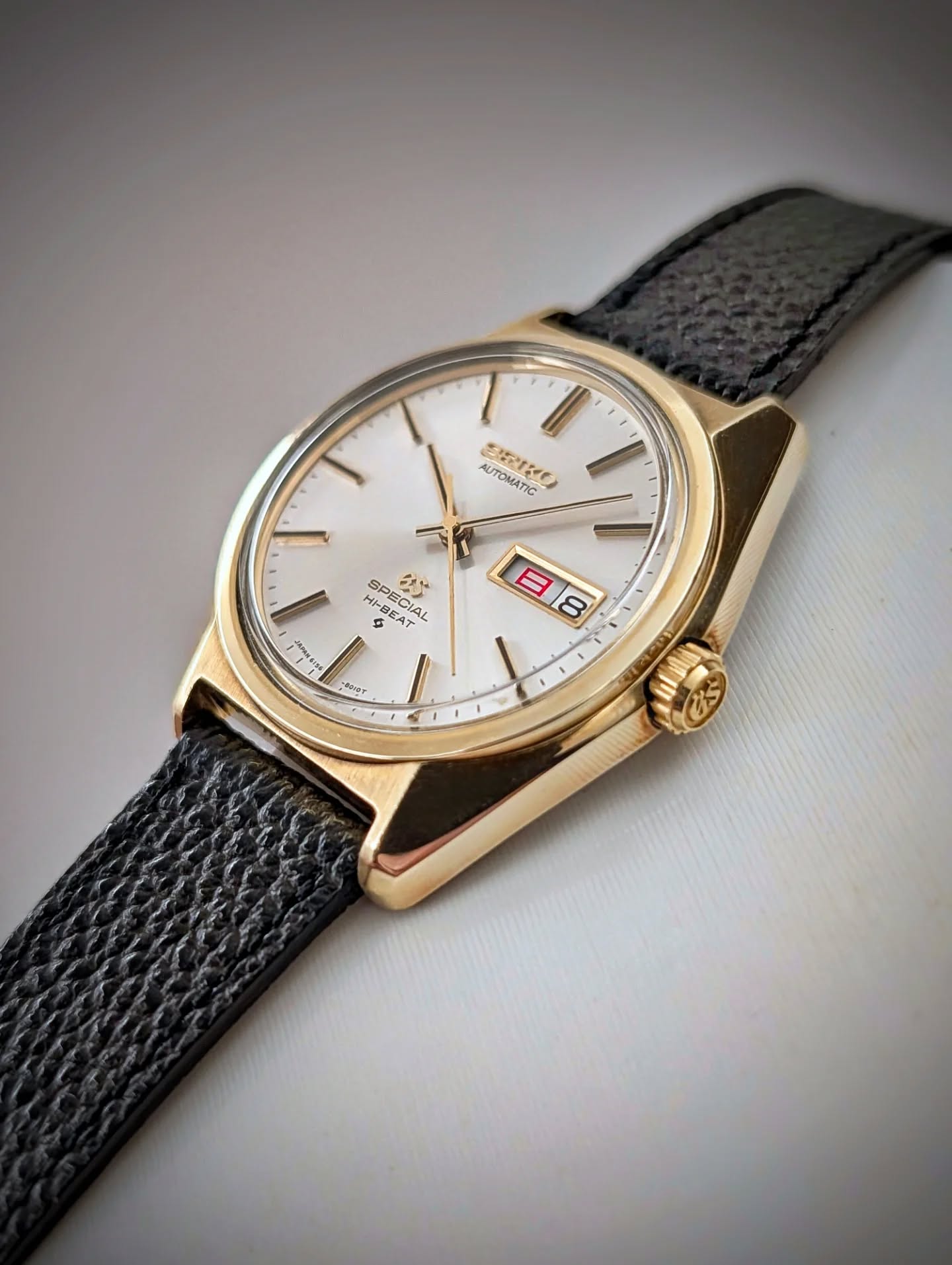
Grand Seiko 61GS Special 6156-8020
Same suit, different rank
The 6156-8020 is easy to underestimate. Its cap-gold case looks so familiar from the regular 61GS that the watch can pass unnoticed as another 6146. It took seeing it in the catalogues to make me realise what I had been overlooking.
Then sunlight reaches the dial. The unmistakably silver sunburst against the gold case creates a brilliant mixture of cool and warm metal. It is an unusually vivid combination, with none of the quiet creaminess I had expected from a gold Grand Seiko.
A firm perimeter
The long black-accented markers reach into the minute track, almost to the bezel. Their polished sides work with the raised Seiko and GS lettering to give the face depth. The black keeps a firm hold on the perimeter even when the silver and gold are doing their best to overwhelm it.
The hands are shorter and their black accents are integrated differently from those of the regular 61GS. The date-window surround and the proportions of the minute marks also change. What initially looks like a familiar watch reveals itself through a whole series of small, coordinated decisions.
The watch
| Reference | 6156-8020 |
|---|---|
| My example | July 1971 |
| Manufacture | Suwa Seikosha |
| Movement | 6156A · automatic |
| Beat rate | 36,000 vibrations/hour · 5 Hz |
| Functions | Hours, minutes, central seconds, day and date |
| Case | Cap gold |
| Dial | Silver sunburst · black-accented markers |
| Case width, without crown | 36.8 mm |
| Thickness, including crystal | 12.0 mm |
Dimensions measured on this example.
A familiar case, a different expression
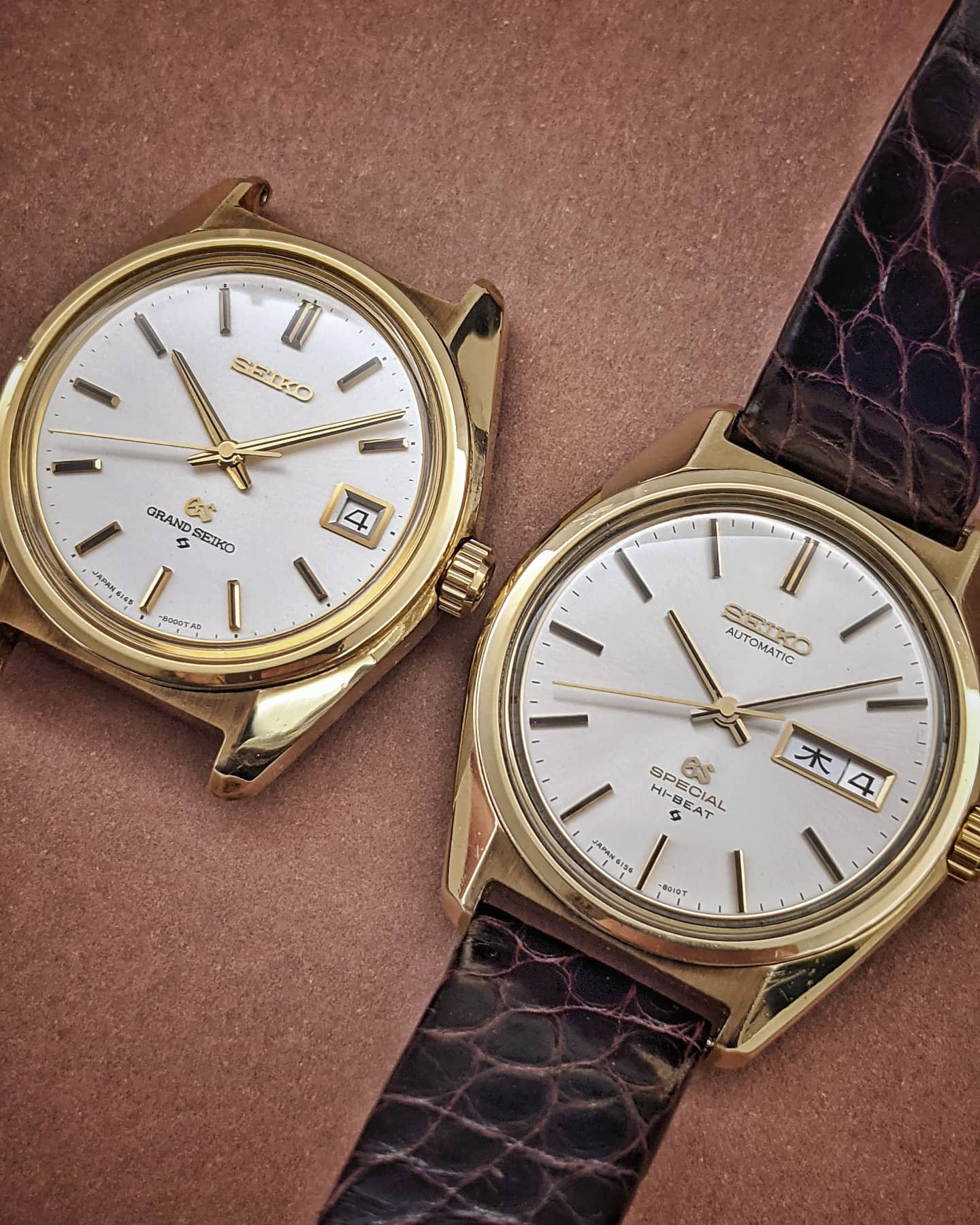
Putting the Special beside my early-dial cap-gold 6145-8000 made those differences unusually clear. Their case outlines appear closely related, leaving the dial furniture to change the character of the watch: marker length and bevels, the shorter hands, the date surround and that silver sunburst. I read the result as a particularly engaging point between the regular 61GS and the more extreme VFA.