Grand Seiko 61GS Special 6156-8010
A soft scalpel
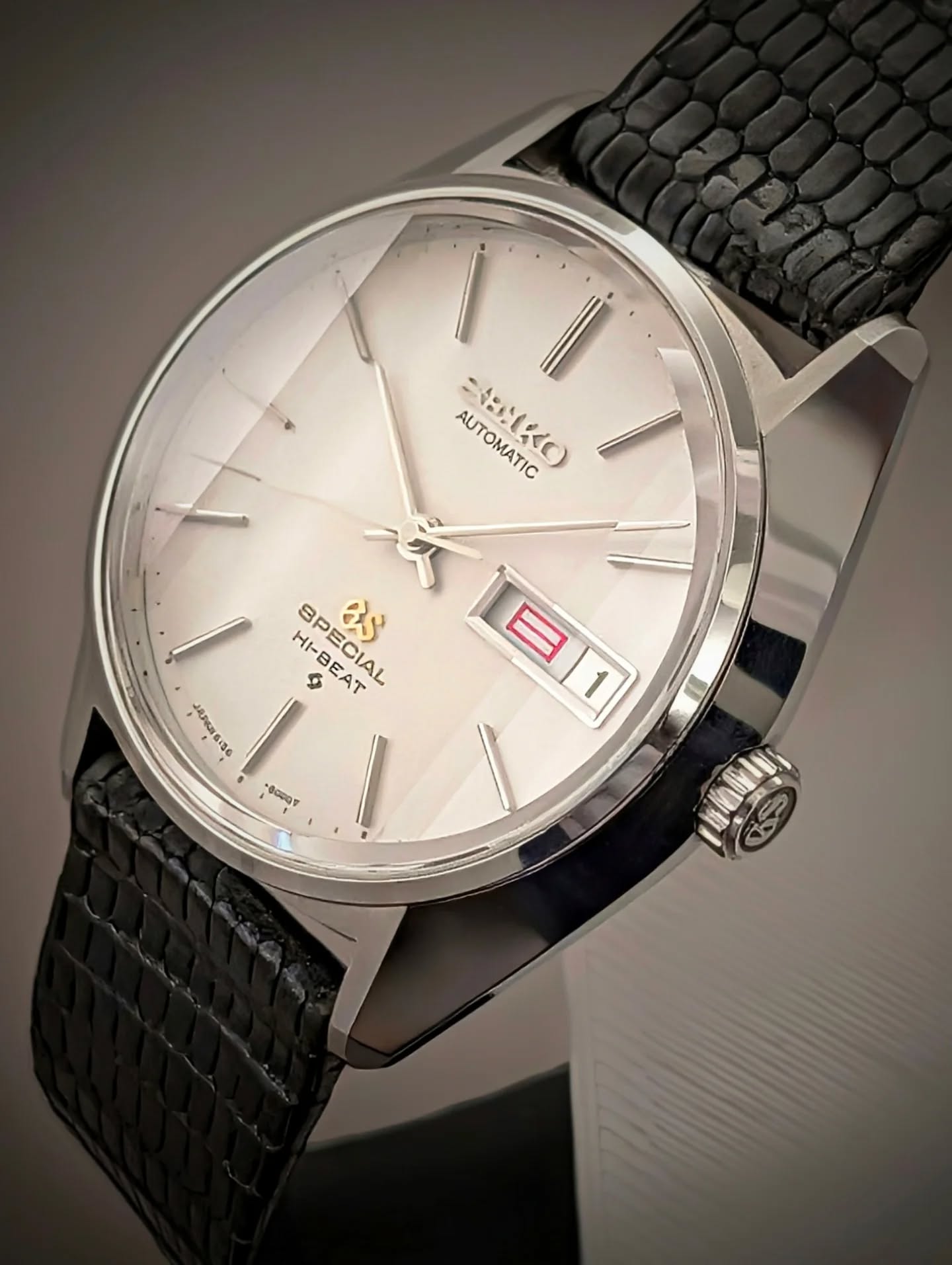
The first impression is almost jewel-like: a pale, delicate dial, fine polished hands and markers, and the small gold GS emblem. The metal catches the light with extraordinary precision. Legibility is not its most emphatic quality; the pleasure is in how delicately the dial is articulated.
The case is a more substantial object than that fine face suggests. It feels compact and decidedly thick, with sharply defined flanks beneath the cut crystal. I enjoy that contrast between a forceful profile and a restrained, luminous interior.
Facets that belong
The folds in the crystal align with the straight inner edges of the lugs. That precise alignment gives the cut glass its purpose within the composition; it is more than an added attraction. Case and crystal describe the same geometry at different heights.
Even the day–date aperture rewards attention. The subtle difference in tone between its two discs makes their separation read, to my eye, as a small abstract composition. The red Sunday kanji adds another sharply judged note of colour. On the XAB-271 bracelet, the sequence of reflections continues well beyond the case.
The watch
| Reference | 6156-8010 |
|---|---|
| My example | June 1971 |
| Manufacture | Suwa Seikosha |
| Movement | 6156A · automatic |
| Beat rate | 36,000 vibrations/hour · 5 Hz |
| Functions | Hours, minutes, central seconds, day and date |
| Case | Stainless steel |
| Dial | Pale dial · polished markers · gold GS emblem |
| Crystal | Faceted |
| Bracelet shown | XAB-271 |
| Case width, without crown | 35.5 mm |
| Thickness, including crystal | 12.9 mm |
Dimensions measured on this example.
The bezel and crystal trade places
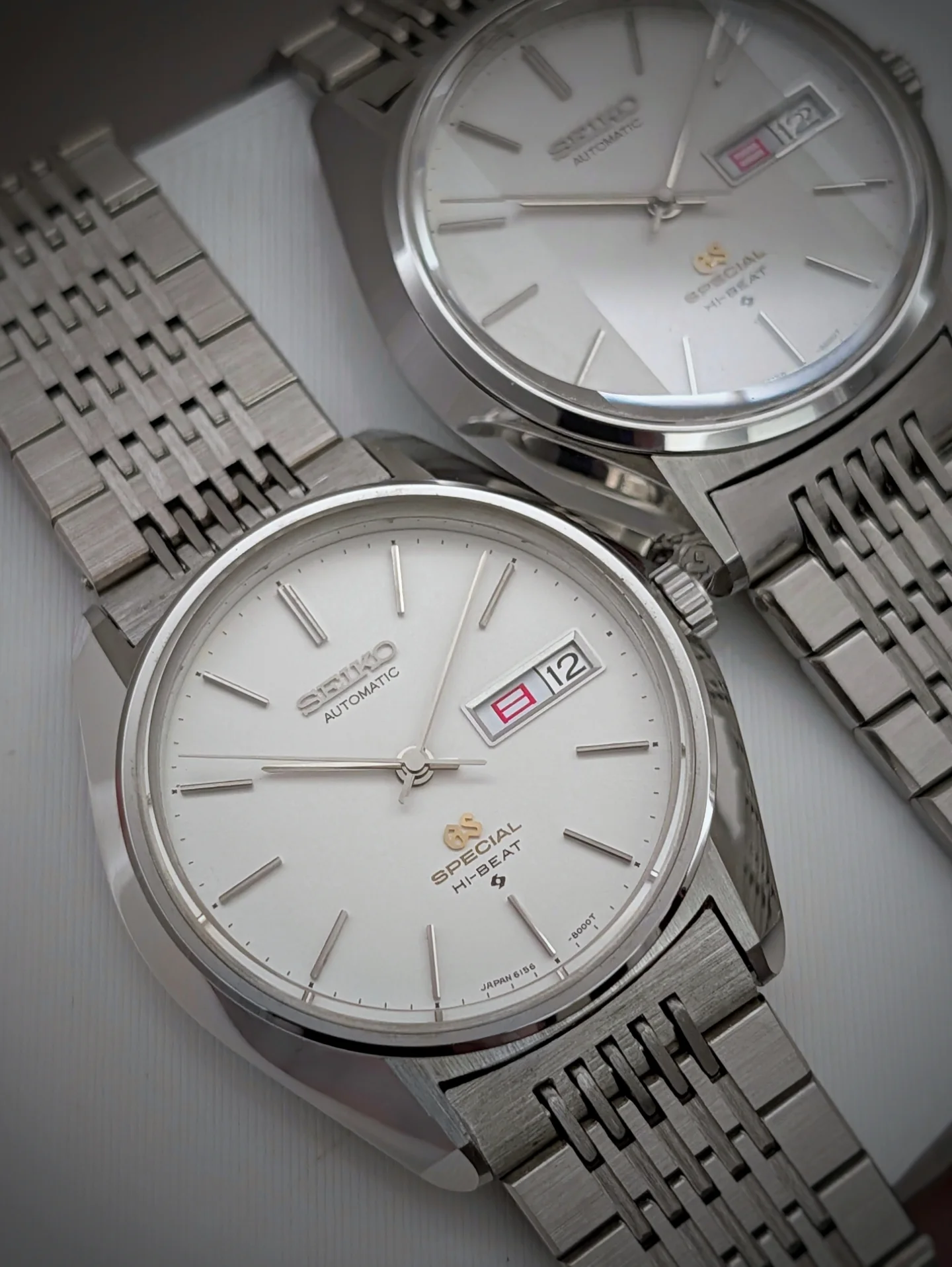
Beside the 6156-8000, the difference lies in where each watch puts its emphasis. The 8000 uses a very thin bezel and a substantial flat crystal. This 8010 gives more width to the bezel and breaks the crystal into facets. With both on the same bracelet, those small changes make two clearly different objects.