Grand Seiko 61GS 6146-8050
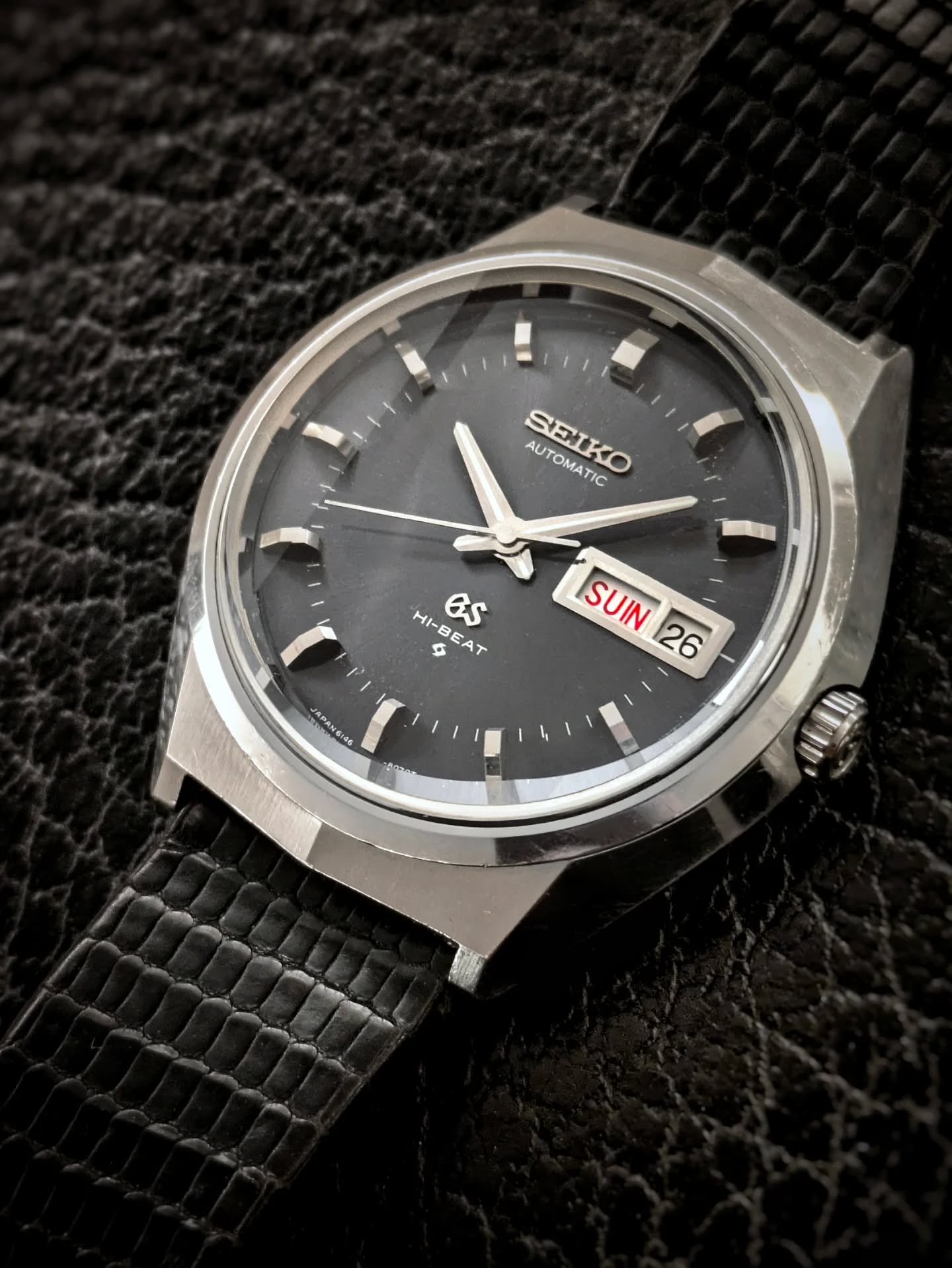
Hi-beat architecture
This is one of the 61GS designs that seems to occupy more space than its measurements promise. The broad case, deep blue dial and angular crystal create a conspicuously three-dimensional object. The hour markers join in: substantial trapezoids take the place of the more familiar rectangular bars.
A fresh crystal brought the sharpness of those reflections back to my May 1972 example. I enjoy the deliberate extravagance of it. Every angle offers another arrangement of bright planes, dark blue and polished metal.
Hands that float
The thin white stripes on the hour and minute hands make the watch surprisingly legible in subdued light. They are an unusually practical counterpoint to all that spectacle.
The markers do not repeat those white accents. As the light falls, the hands can seem to float within the dial, released from the visual network normally formed by matching hands and indices. It is a small change with a rather strange and memorable effect.
The watch
| Reference | 6146-8050 |
|---|---|
| My example | May 1972 |
| Manufacture | Suwa Seikosha |
| Movement | 6146A · automatic |
| Beat rate | 36,000 vibrations/hour · 5 Hz |
| Functions | Hours, minutes, central seconds, day and date |
| Case | Stainless steel |
| Dial | Blue · trapezoidal markers |
| Crystal | Faceted |
| Case width, without crown | 37.9 mm |
| Thickness, including crystal | 12.6 mm |
Dimensions measured on this example.
Blue and green, both faceted
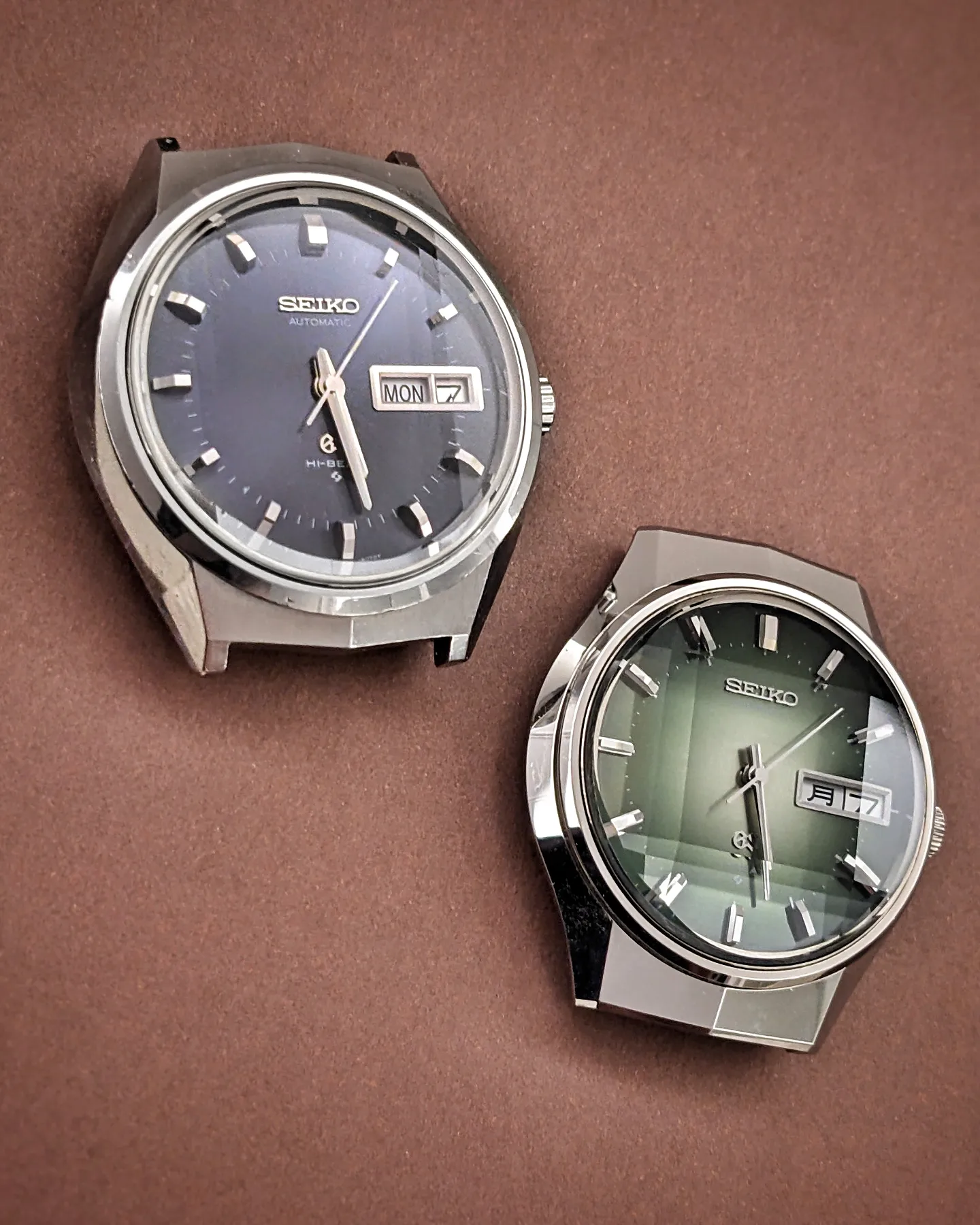
I have photographed this May 1972 watch beside the green 5646-7020 from August of the same year. Both let colour and cut crystal play an unusually active part in the composition. Seeing them together gives a sense of how far that shared appetite for experiment could travel within Grand Seiko.