Grand Seiko 61GS VFA 6185-8021
Beyond
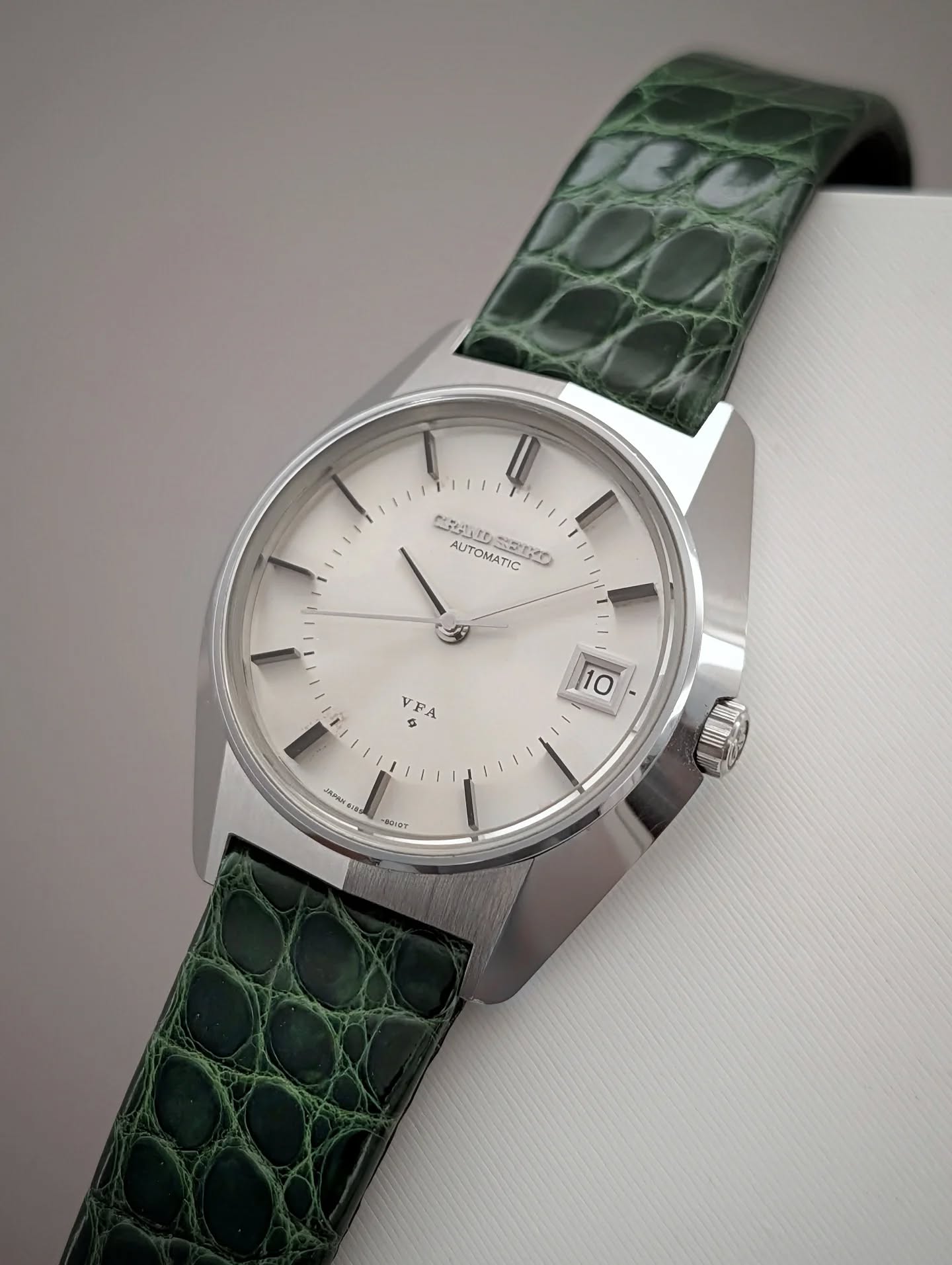
This is the watch that started my Grand Seiko collection. Years of looking have done remarkably little to diminish the first shock of it. The champagne dial, black monoliths and extraordinarily short hands still feel like an object sent back from a rather distant future.
The markers are solid volumes rather than polished bars with black accents added. The minute track sits on their inner side, and the thin hands work within that smaller field. Their proportions turn the dial into an unusually deep and concentrated landscape. Even before its precision enters the conversation, this is a singular watch.
The fold and the narrow bezel
Between the lugs, an additional central fold divides the brushed plane and changes the way the case meets the strap. A very small movement is enough to light one facet and darken the other. Capturing that fleeting balance is one of the pleasures, and frustrations, of photographing it.
The bezel deserves equal attention. It is exceptionally narrow, leaving the line between the lugs clear and allowing the case to read as an elongated form. To my eye, its thinness also belongs with the remarkable proportions of the markers. These are interdependent decisions, not three unrelated flourishes.
Precision with presence
VFA means Very Fine Adjusted, and the mechanical ambition is part of the attraction. My experience of this serviced example has been one of strikingly consistent timekeeping. Yet it is the combination that matters: the assurance of the movement inside an object whose shapes remain so extraordinary. Putting it on still feels like an occasion.
The watch
| Reference | 6185-8021 |
|---|---|
| My example | May 1971 |
| Manufacture | Suwa Seikosha |
| Movement | 6185B · automatic |
| Beat rate | 36,000 vibrations/hour · 5 Hz |
| Functions | Hours, minutes, central seconds, date |
| Case | Stainless steel |
| Dial | Champagne sunburst · black volumetric markers |
| Case width, without crown | 37.0 mm |
| Thickness, including crystal | 11.4 mm |
Dimensions measured on this example.
The line between the lugs
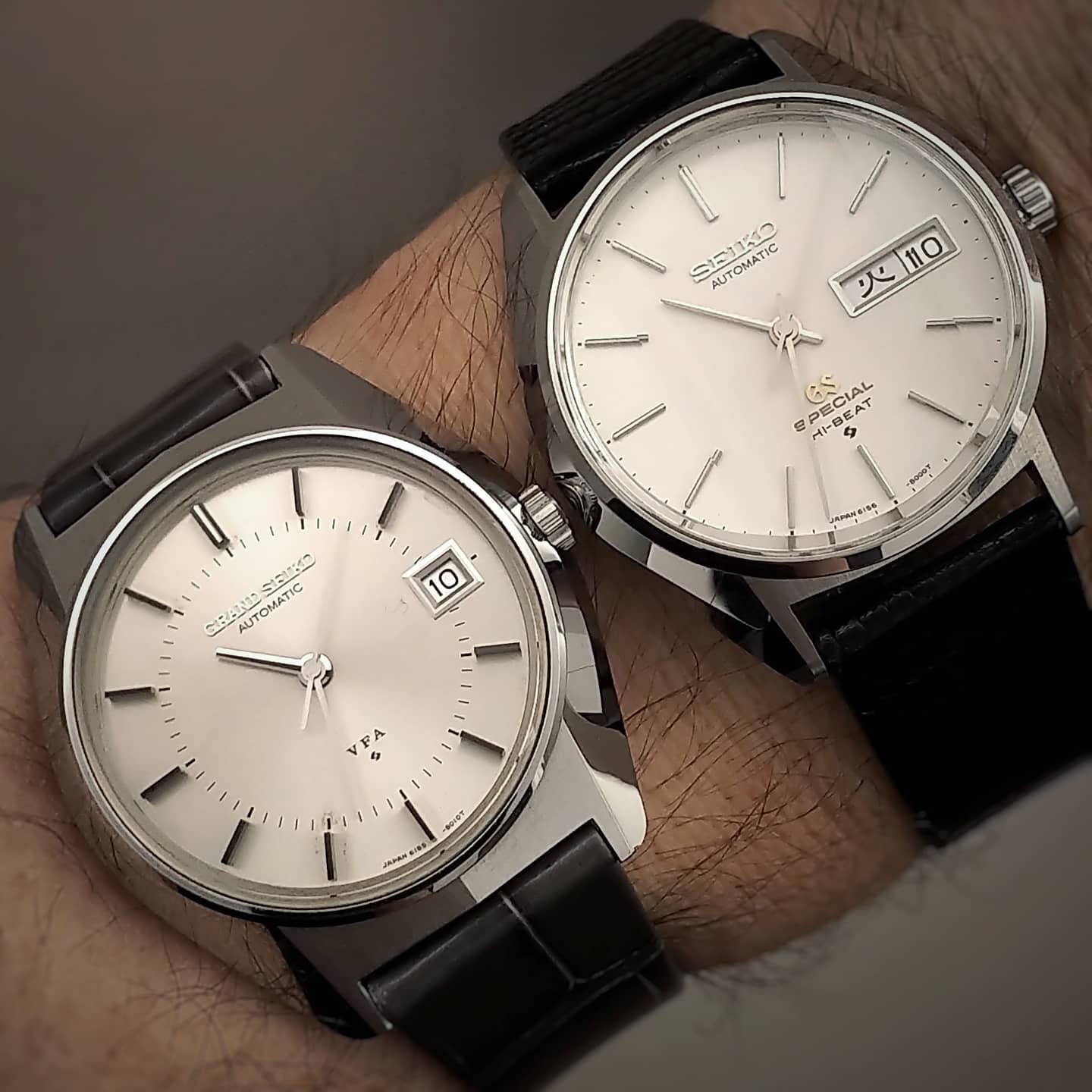
Beside the 6156-8010 Special, the VFA’s additional fold becomes especially revealing. It carries the case towards the strap with an unusually strong gesture. On the Special, the connection retreats towards the bezel and takes on a gentler curve, making the composition feel more compact. A small part of the case changes the behaviour of the whole watch.
An unexpected inheritance
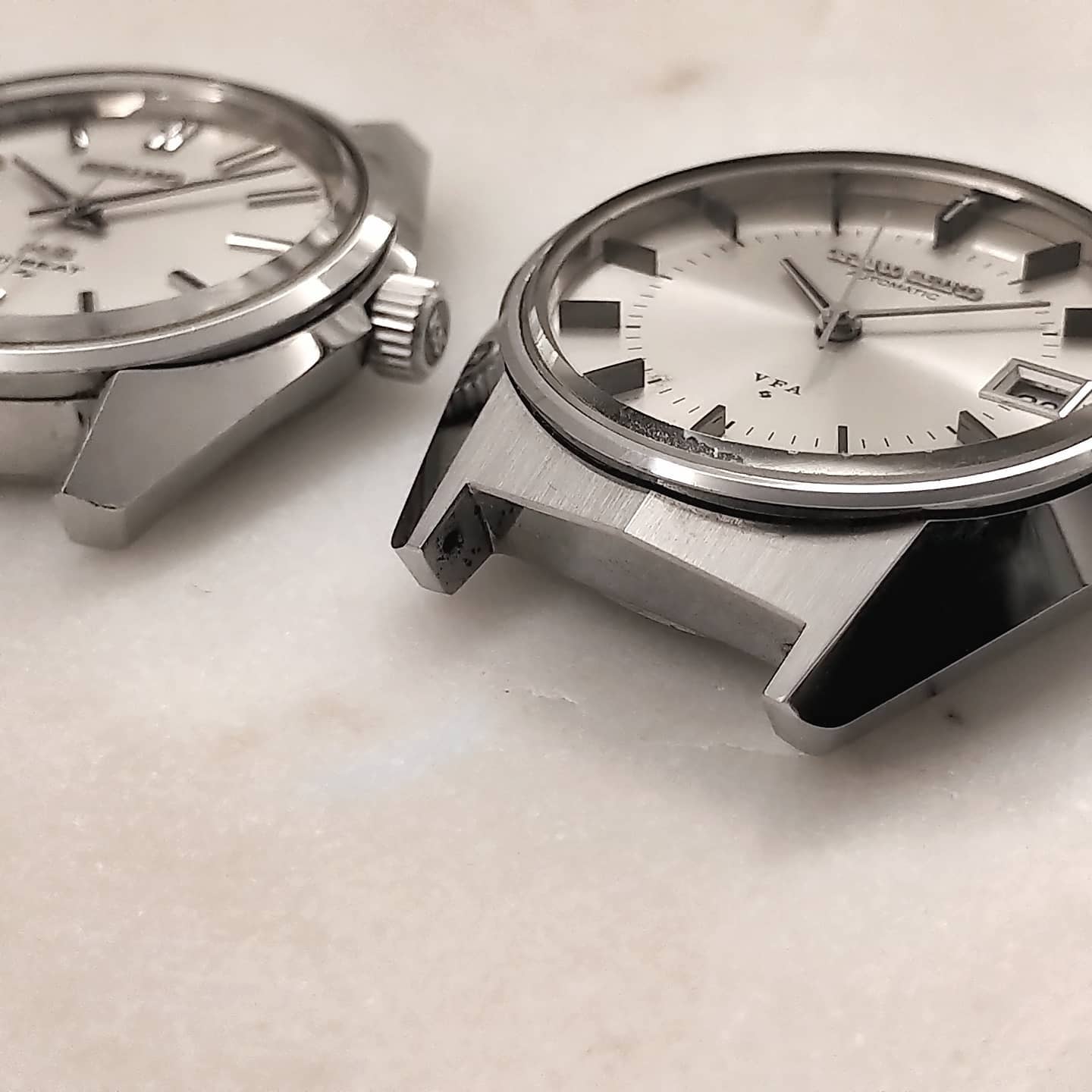
The futuristic VFA still carries a trace of the early King Seikos. In my comparison of lug ends, I found the same outward-opening rounding and small inner fold in the King Seiko Chronometer, the 45-7000 and this watch. The connection crosses both factory and family boundaries. Formal ideas travel less obediently than model names.
An architecture carried forward
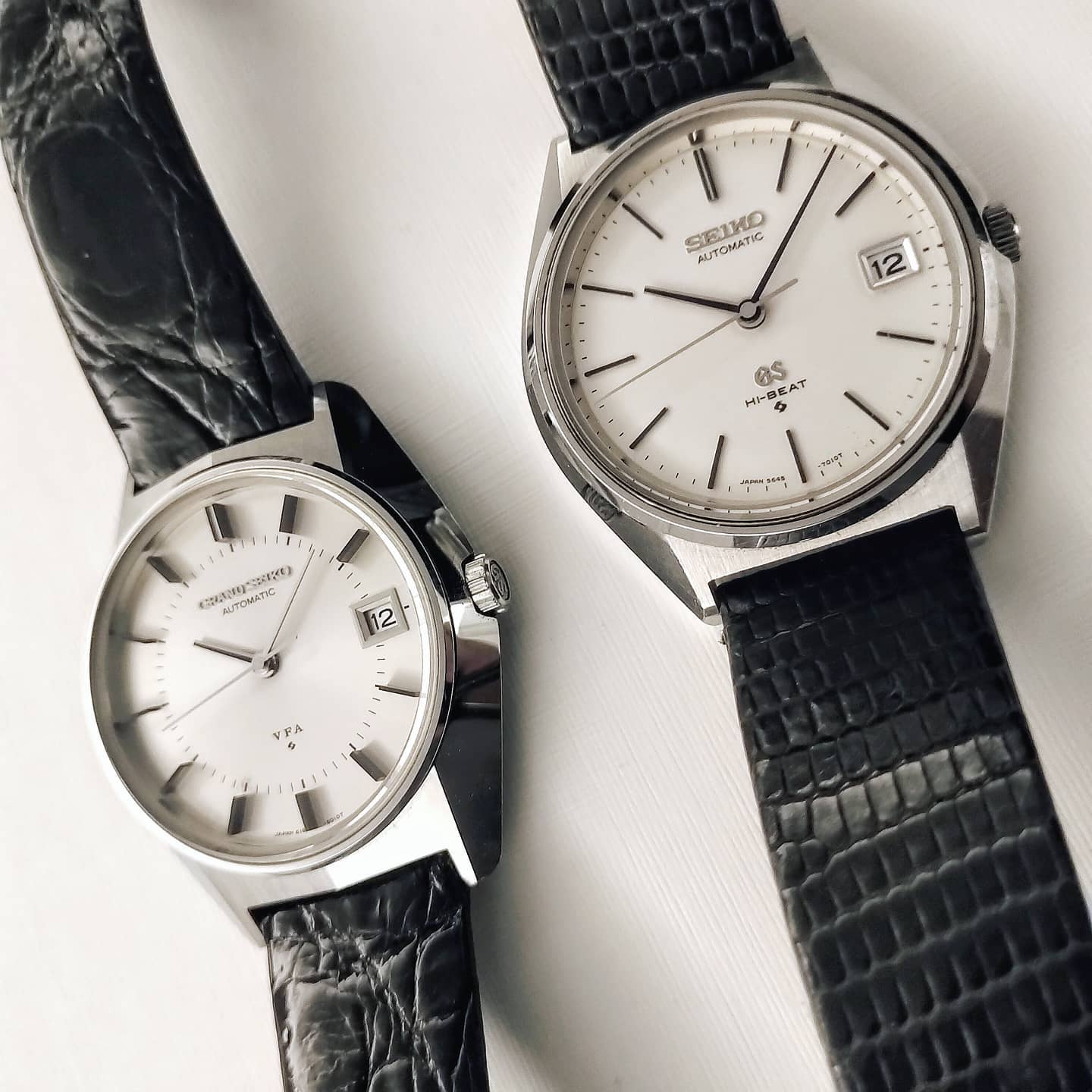
In this earlier photograph, the VFA stands beside a steel 5645-7010. The family resemblance goes beyond a matching colour scheme. The 56 carries forward something of the VFA’s relationship between the markers, hands and the space around them, though its black accents remain part of more conventional polished indexes.
On the VFA those accents become solid black volumes. It is a surprisingly radical development of an idea that remains clearly legible in the quieter 56. Having the watches together made that continuity much easier for me to see.