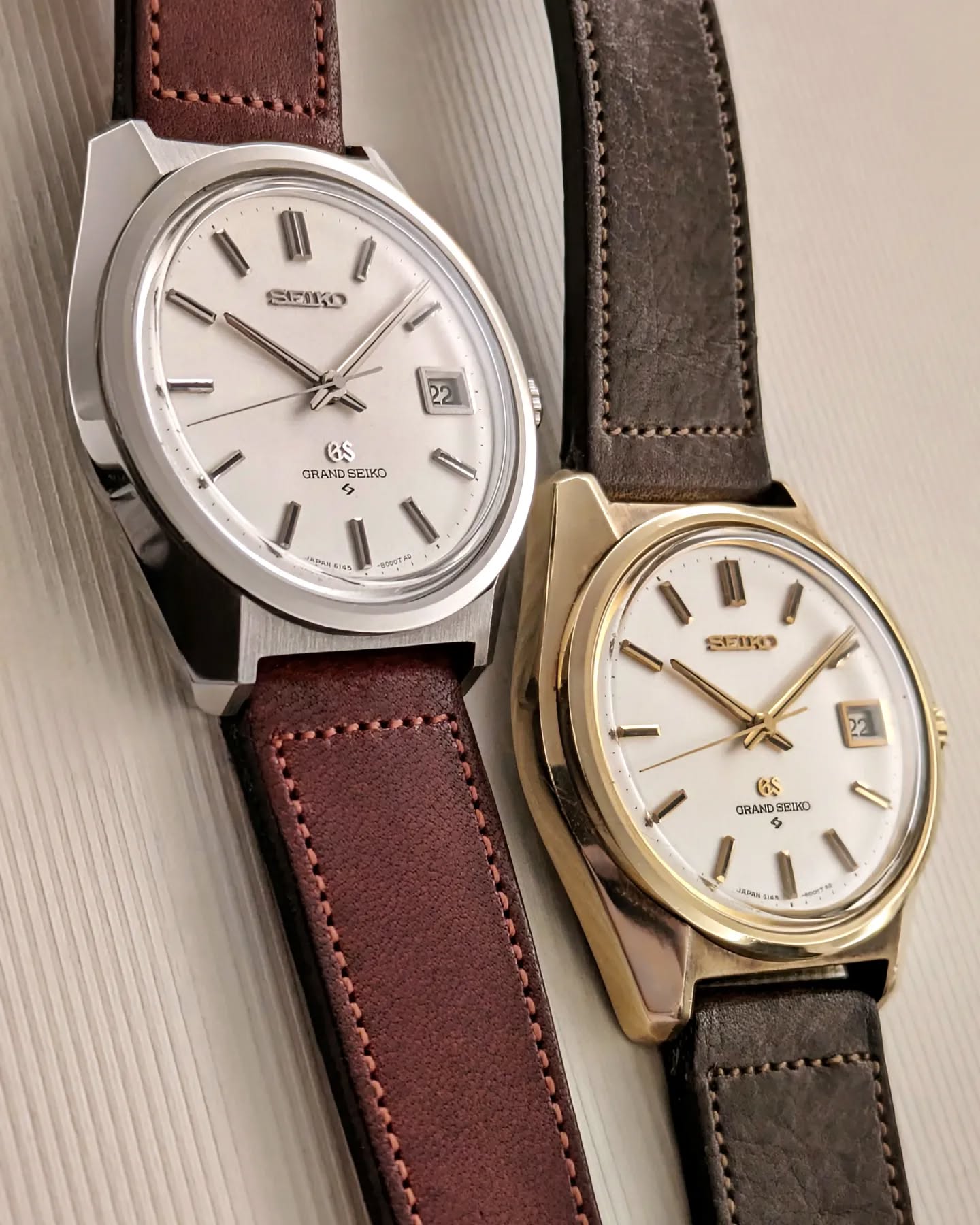
Grand Seiko 61GS 6145-8000
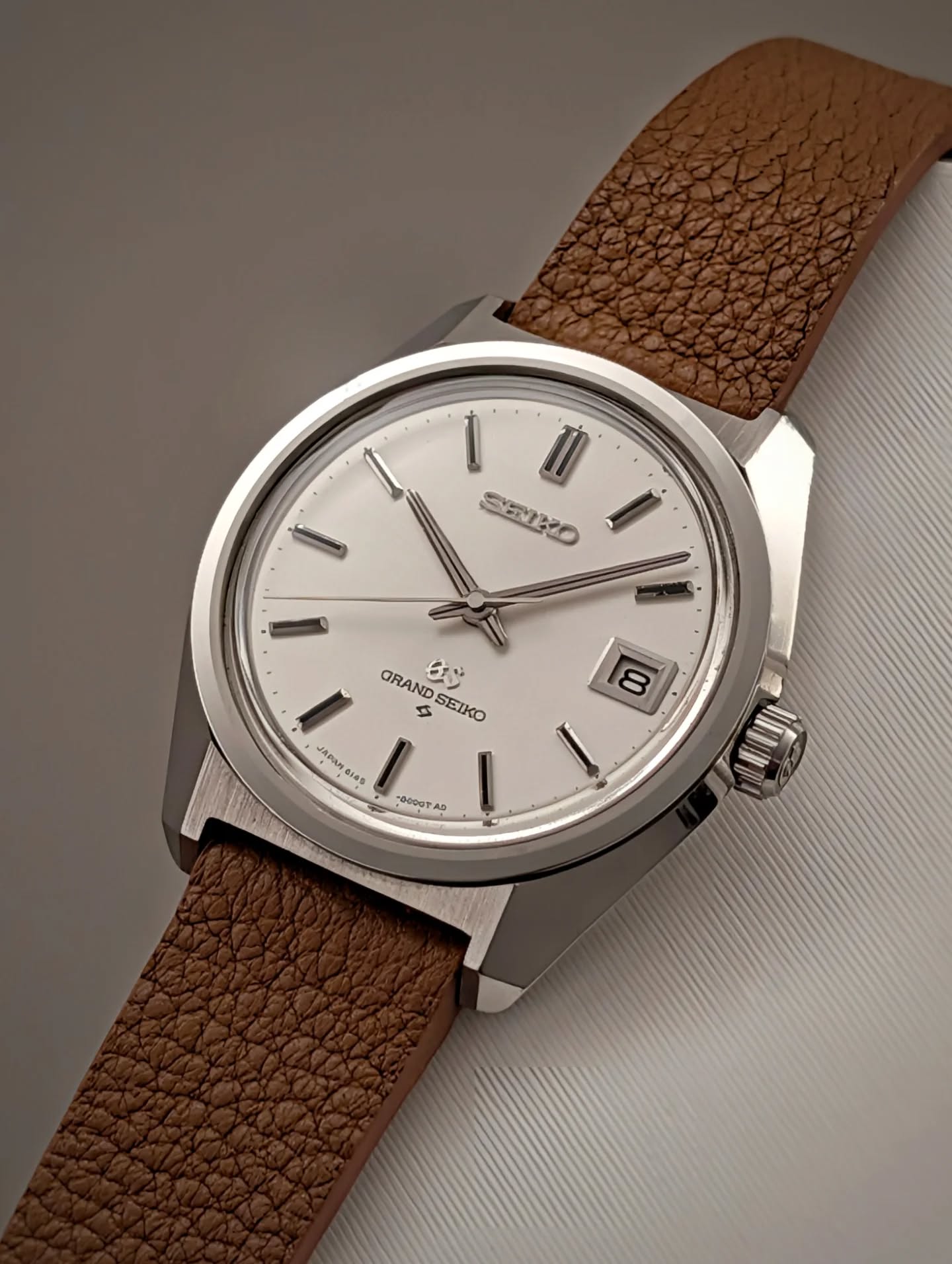
Before the dial started explaining itself
The early 6145-8000 says remarkably little about what it can do. Seiko, Grand Seiko and the Suwa emblem are enough. Yet the 61GS introduced Grand Seiko’s first automatic movement running at 5 Hz, or 36,000 beats per hour. At the time, Seiko was one of a select few brands producing automatic wristwatches at this frequency. The absence of any Hi-Beat announcement on this early dial makes its restraint all the more striking. My September 1967 steel example and its December cap-gold companion leave that ambition to be discovered in use.
The dial has a particular balance of strength and delicacy. Short, substantial markers stay inside the minute track, leaving a clear margin around the perimeter. Fine black lines sharpen their reading without overwhelming the polished metal. Even the factory emblem has a beautiful, almost calligraphic presence.
The refined brute
The profile gives the watch away. Those blunt, nearly vertical lug ends lift the dial into a firm, flat platform above the wrist. The horizontal case fold sits high, the shoulders are broad and the whole object has a squared, purposeful stance. I have called it refined brutalism; it remains one of the most convincing descriptions of how this watch feels.
The substantial, coarsely knurled crown belongs to that character. After the discreet recessed crown of the 62GS, it is a wonderfully direct object to handle. The convenience of an automatic has not diminished the pleasure of winding it.
The watch
| Reference | 6145-8000 |
|---|---|
| My example | September 1967 |
| Manufacture | Suwa Seikosha |
| Movement | 6145A · automatic |
| Beat rate | 36,000 vibrations/hour · 5 Hz |
| Functions | Hours, minutes, central seconds, date |
| Case | Stainless steel |
| Dial | Early dial · light sunburst |
| Case width, without crown | 36.9 mm |
| Thickness, including crystal | 12.0 mm |
Dimensions measured on this example.
Cap gold · early dial
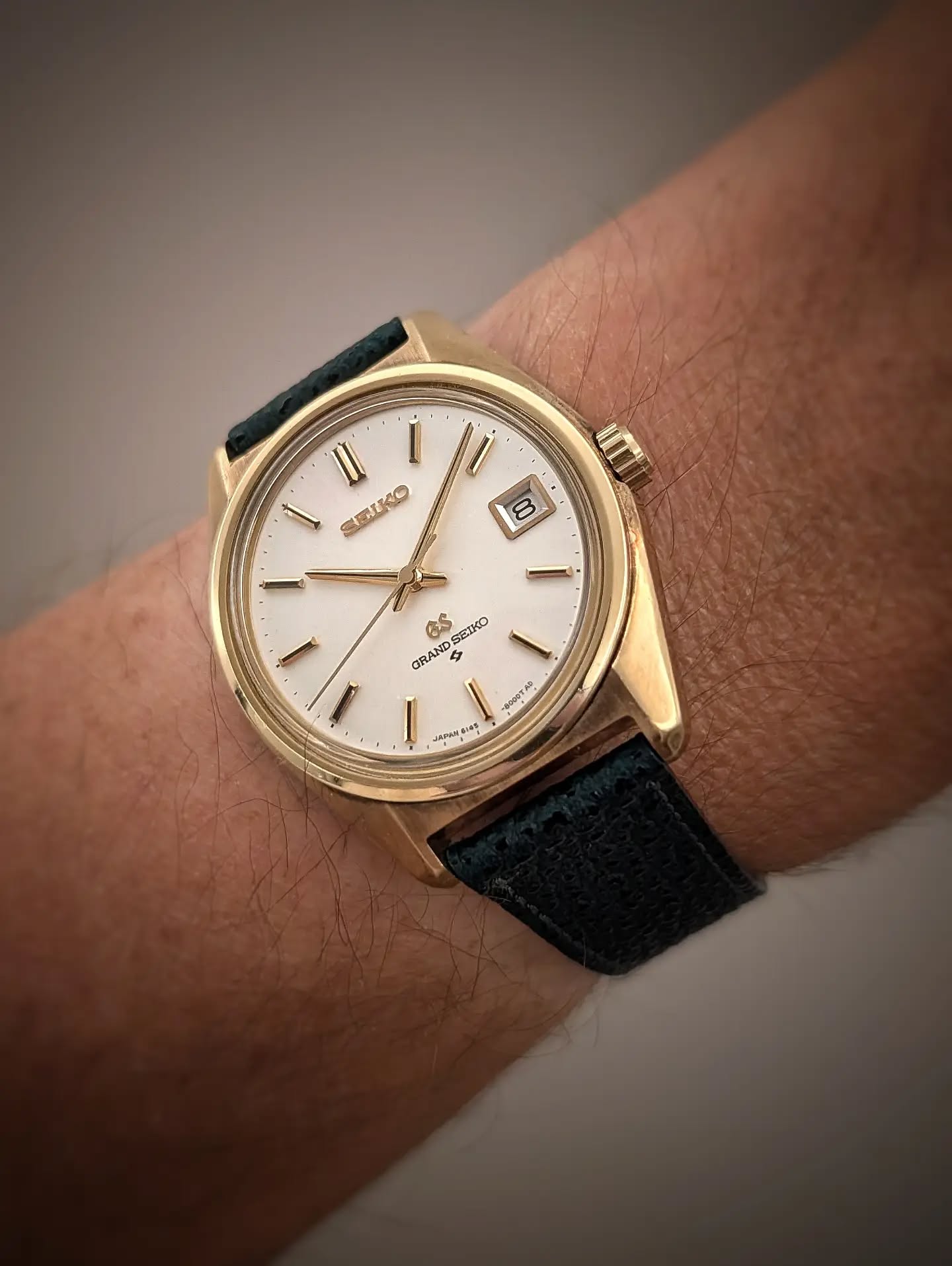
The December 1967 example keeps the same quiet early dial, but the gold cap changes more than its colour. Below the case fold the flank drops towards the bottom edge, giving the watch a fuller, more solid base than the inward-sloping waist of the steel case. The way the gold was fitted is part of the wider construction question explored in the cap-gold essay.
Its appeal is also mechanical. After service, I recorded exceptionally steady timekeeping from this example over several days. The clean dial and confident case are matched by the pleasure of a watch that simply does its job very well.
| Reference | 6145-8000 |
|---|---|
| My example | December 1967 |
| Movement | 6145A · automatic, date |
| Beat rate | 36,000 vibrations/hour · 5 Hz |
| Case | Cap gold |
| Dial | Early dial · light sunburst |
| Case width, without crown | 36.8 mm |
| Thickness, including crystal | 12.1 mm |
Dimensions measured on this example.
Two answers to the same ambition
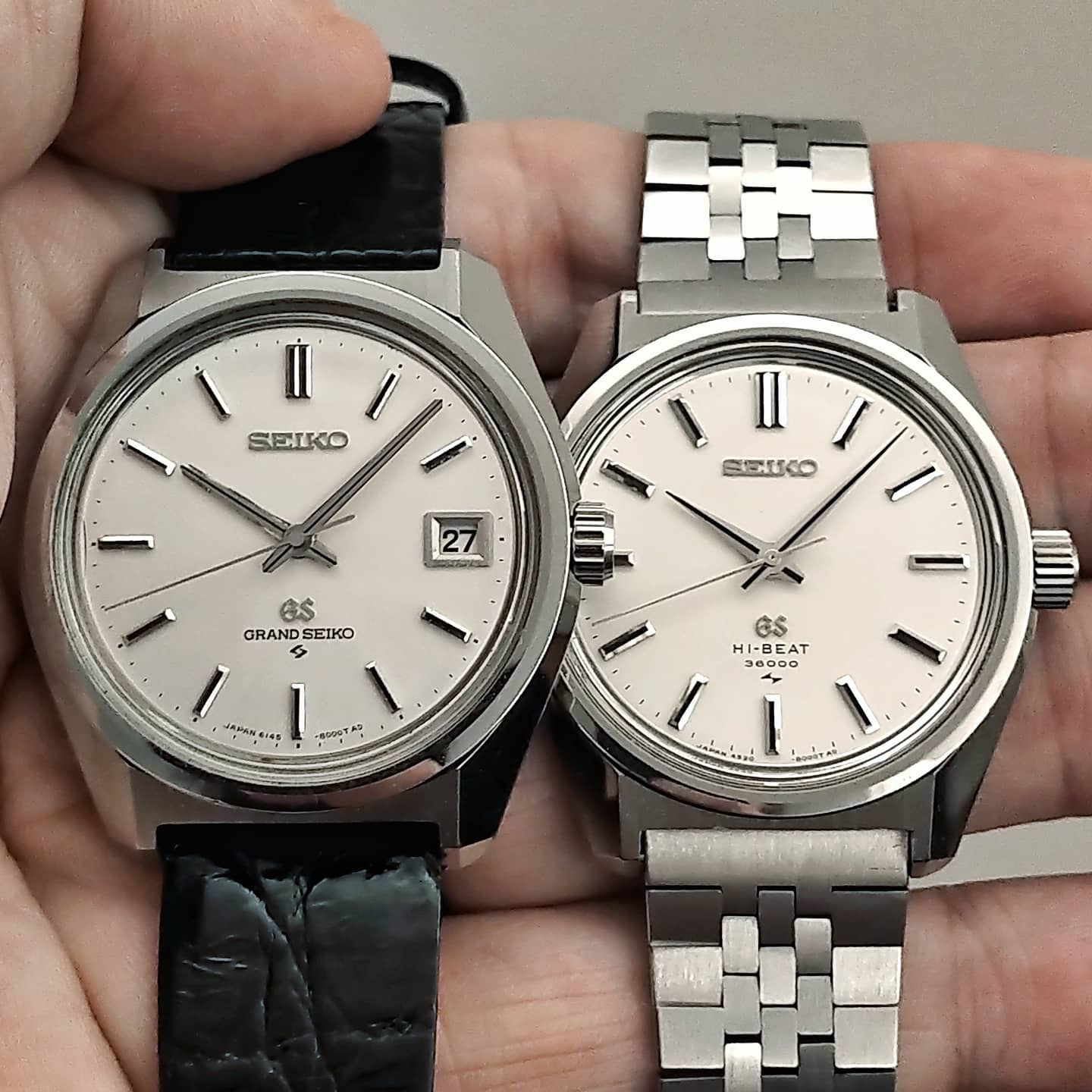
Beside the hand-wound 4520-8000, the differences are everywhere. The 45GS lies close to the wrist, with sloping lug tips and assertive long black accents. This 61GS stands higher and carries shorter markers within a broader dial. Closely related proportions produce two unmistakably different temperaments.
The taller automatic movement helps explain the difference in profile. What interests me is the care with which that greater depth has been given a coherent expression: the lug ends, case fold, bezel and dial furniture all participate.
A later kind of ease
Put the early 61GS beside the 5645-7011 and its physical conviction becomes even clearer. The 61 feels substantial, including in the winding action; the later 56 feels light and easygoing. Against that relaxed successor, the once uncompromising geometry of the 61 can begin to look almost classical.
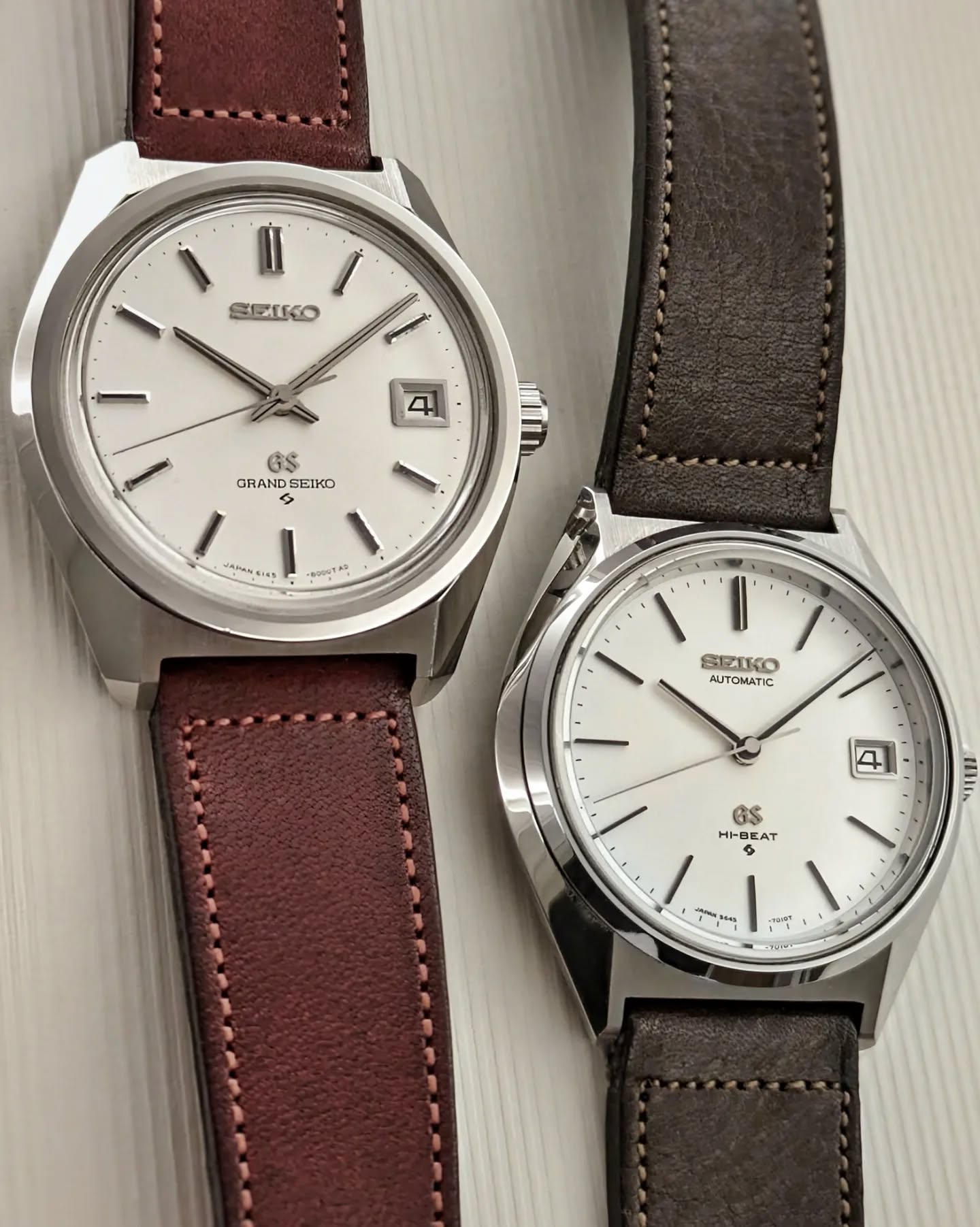
The flank beneath the fold
The early steel and cap-gold watches share the same restrained face, yet their lower flanks behave differently. The steel case draws inward beneath the fold; the cap-gold version drops towards a fuller base. Side by side, that difference in the way the case meets the wrist is more revealing than the change of colour alone.