
A shared silhouette: the KSCM and the 57GS
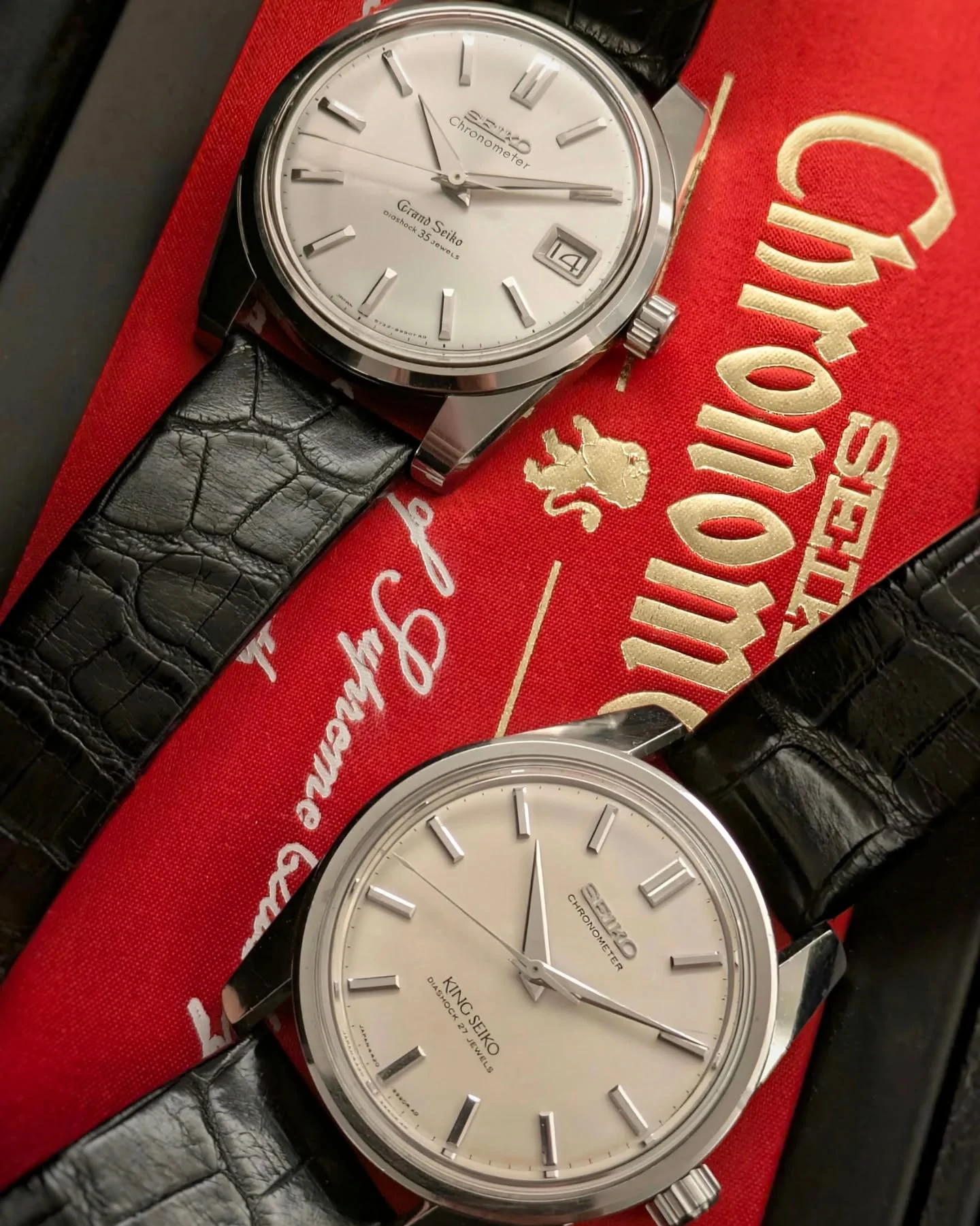
Place the steel Grand Seiko 57GS beside the King Seiko Chronometer. The 5722-9990 I compared with my 4420-9990 makes a particularly revealing pair.
The resemblance is startling. These two 1965 Chronometers have more than a passing family resemblance, even though their movements come from different factories: Suwa for the Grand Seiko, Daini for the King Seiko.
Similar dimensions, different treatment
When I measured these two watches for a side-by-side study, I found practically the same case diameter and length: about 36.5 mm across and 43 mm from lug to lug. Those were my rather clumsy specimen measurements, but they made me wonder whether the case mould for the two could have been nearly the same. A shared production base remains my working hypothesis; I have no factory record confirming it.
Turn them over and the relationship is still there. The broad round bodies, the lugs around them and even the lion medallions invite comparison. The caseback references identify the two watches clearly, while the different treatment of the lugs remains visible from below.
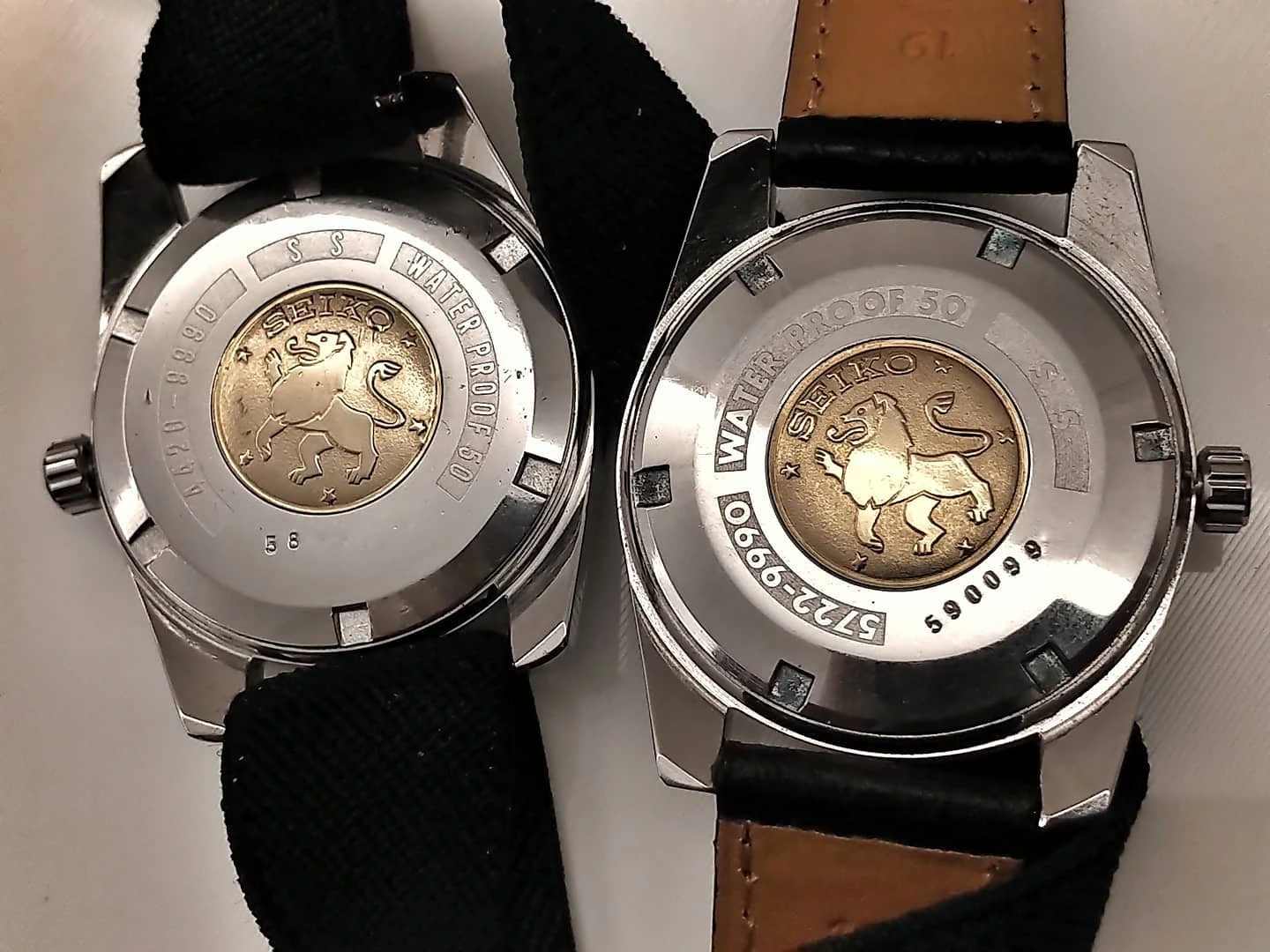
Look at the lugs and you find a softer, more bevelled treatment on the Grand Seiko. The King Seiko gives a simpler account of the same area, with broad surfaces and fewer changes of direction. I have wondered whether that simpler treatment also meant less involved polishing, but that too is an interpretation.
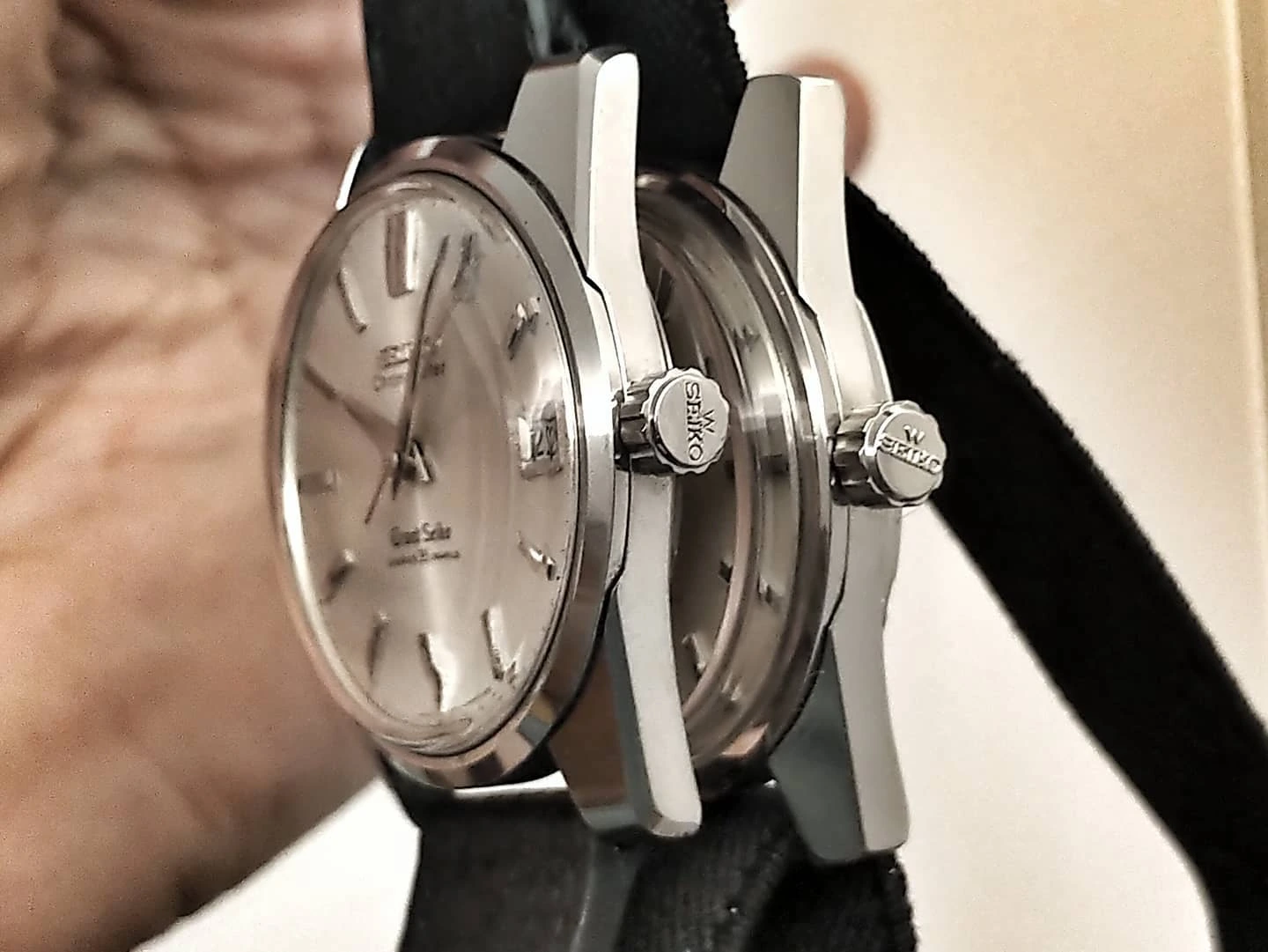
Then look at the bezel. On the 57GS it rises gently towards the domed crystal, staying flush with the case below. On the King Seiko Chronometer, the flat top sits above an outward-flaring side. This works with its flat crystal and indices to give the watch a quite different outward expression.
Even the crowns reward a closer look. Their overall forms look almost identical, but the Seiko signature is recessed on the Grand Seiko and raised on the King Seiko.
The difference across the dial
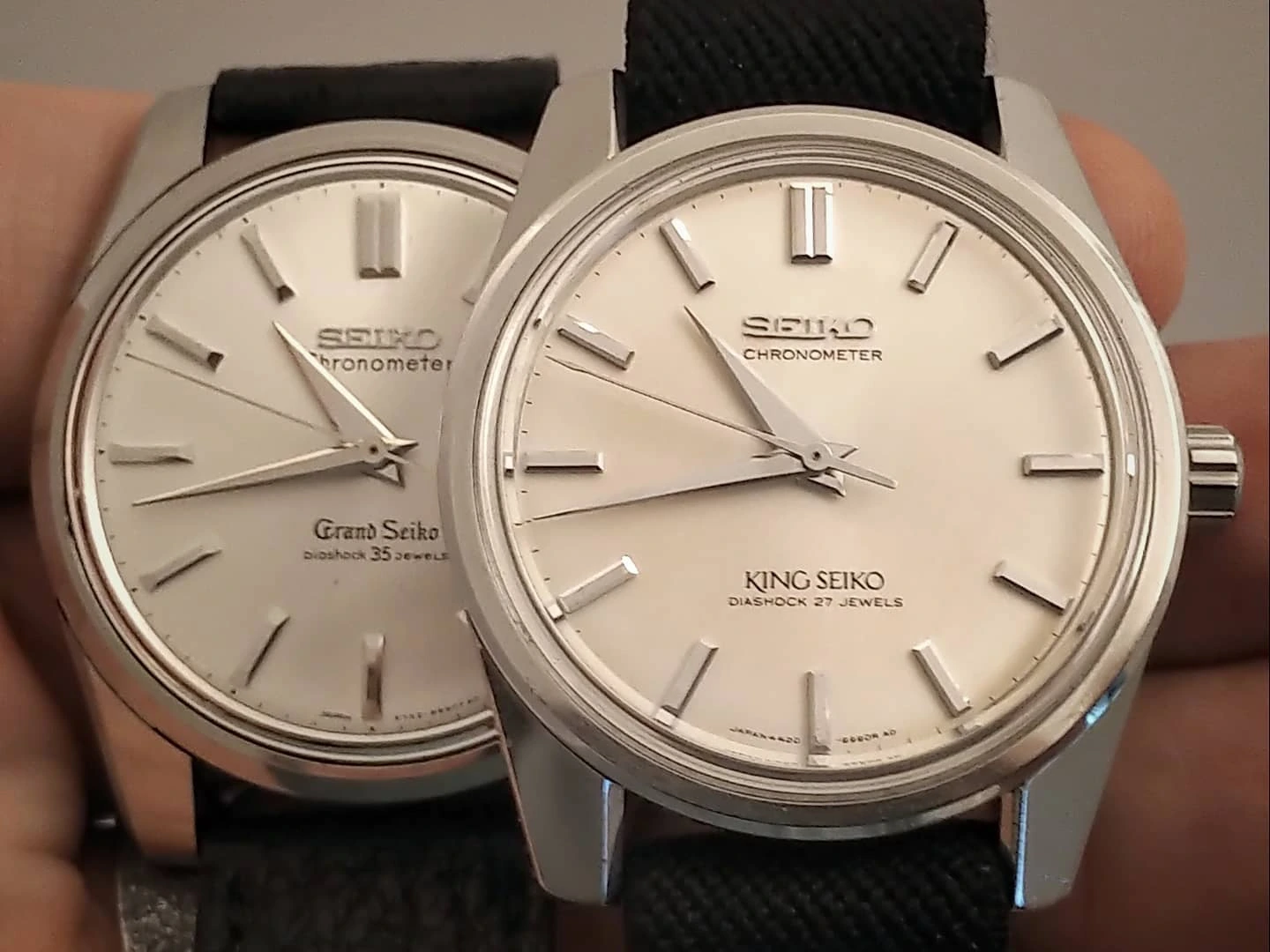
The hands also look remarkably alike. Yet they nearly reach the outer edge of the dial on the King Seiko, while remaining noticeably shy of it on the Grand Seiko. I measured the same outer crystal diameter, about 33 mm, on both specimens. The similar dimensions make the different proportions across the face all the more interesting.
The dials themselves have distinct furniture and textures. The Grand Seiko has a more rounded and elaborated character. The King Seiko is remarkably direct, its flatter elements reinforcing the abstraction of the case. Close relatives in overall presence, they give very different accounts of what a premium watch might be.
The King Seiko’s outward-flaring bezel also brings me back to the steel 44GS, the 4420-9000. I see it as an early version of a gesture that becomes much more emphatic there. The comparison with the 57GS helps isolate that choice: a closely related outline can already move in two different directions.
This is why I keep the 57GS in the story. It lets us see how close the two lines can come while retaining their distinct temperaments. It also prevents the factory names from becoming walls in our understanding of the design. Formal relationships travel across them.