Grand Seiko 61GS 6146-8009
The inconspicuous exception
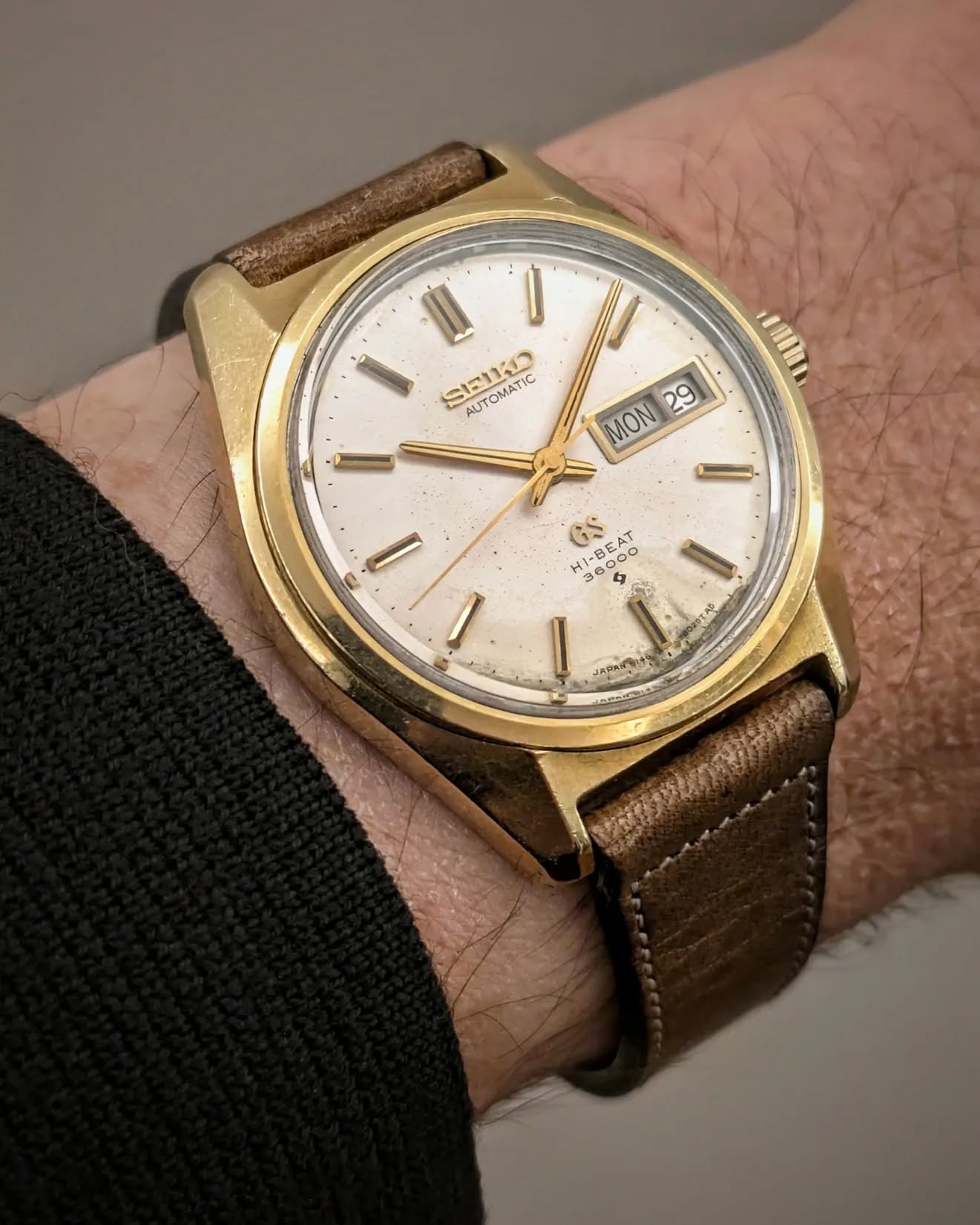
At first glance this could pass for an ordinary cap-gold 6146. The July 1968 export reference is an unusually discreet rarity, with much of its interest hidden behind its weathered exterior.
Amnesty for a life well lived
This example has been used, and its gold-covered case does little to disguise that. I have no wish to make its appeal depend on pretending otherwise. The wear gives an unexpectedly rugged character to a design usually admired for its immaculate surfaces.
It has also been one of my most satisfying watches to wear. During one extended spell I recorded less than five seconds of drift over two weeks. That experience made it an easy choice to put on in the morning, and a useful reminder that a weathered exterior need not tell the whole story.
The watch
| Reference | 6146-8009 |
|---|---|
| My example | July 1968 |
| Movement origin | Suwa Seikosha |
| Movement | 6146A · automatic |
| Beat rate | 36,000 vibrations/hour · 5 Hz |
| Functions | Hours, minutes, central seconds, day and date |
| Case | Cap gold |
| Dial | Light dial · day and date |
| Case width, without crown | 36.9 mm |
| Thickness, including crystal | 12.1 mm |
Dimensions measured on this example.
Suwa on the dial, Daini within
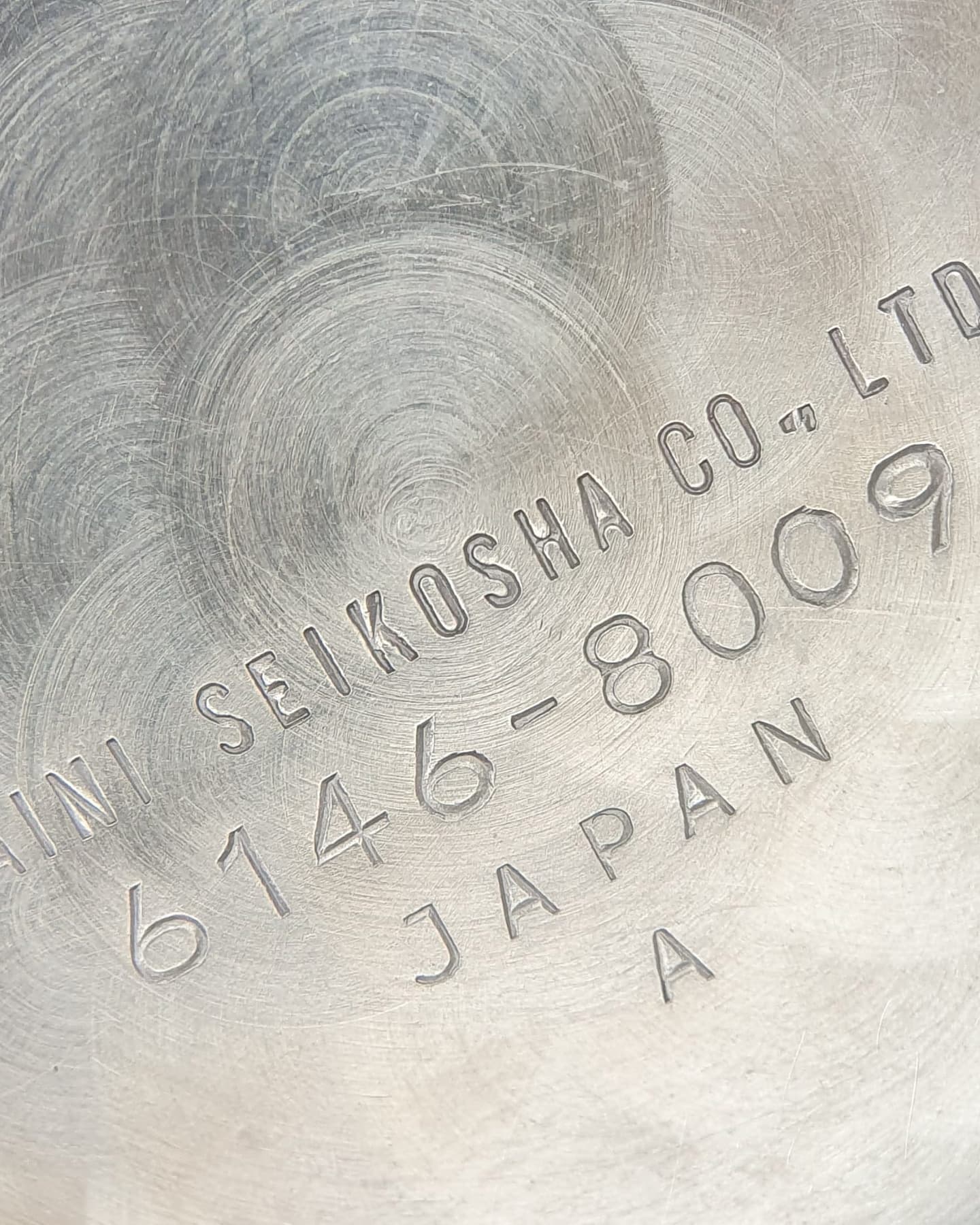
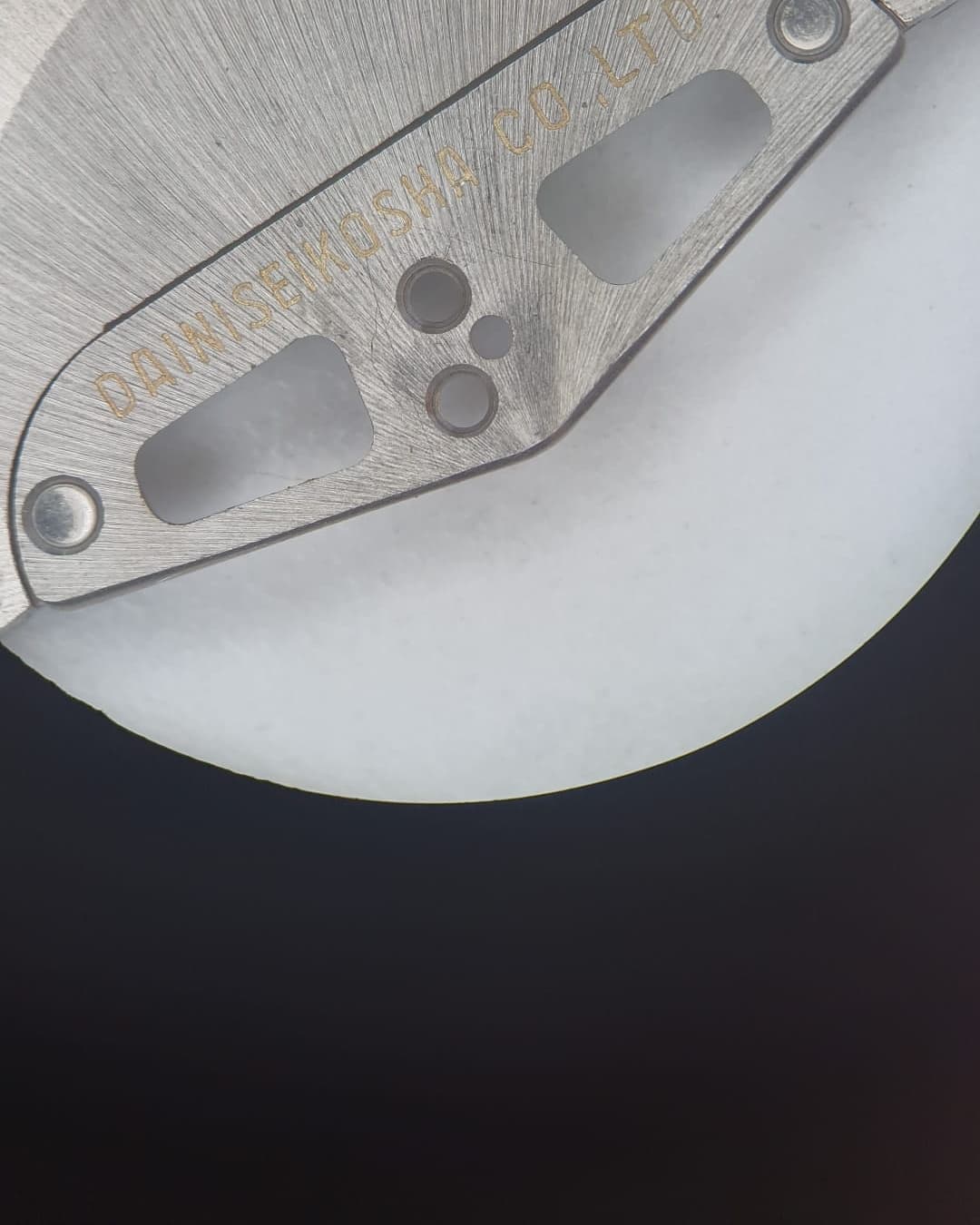
The 61GS belongs to Suwa, and the dial carries its familiar emblem. Inside this July 1968 example, however, both the rotor and the caseback bear the Daini Seikosha name. Seeing those two inscriptions together is what makes this otherwise unassuming watch so intriguing.
In September 2021, I noted another July 1968 6146-8009 shown by Japanese collector @tokyo_watchs. More surprising still was the steel 6146-8000 he showed next: an April 1968 example, complete with its original set, carrying the same Daini inscriptions.
That steel watch changed the question. These markings were not confined to the -8009 export reference. The familiar division between Suwa and Daini suddenly looked less tidy, revealed by details that would ordinarily remain out of sight.