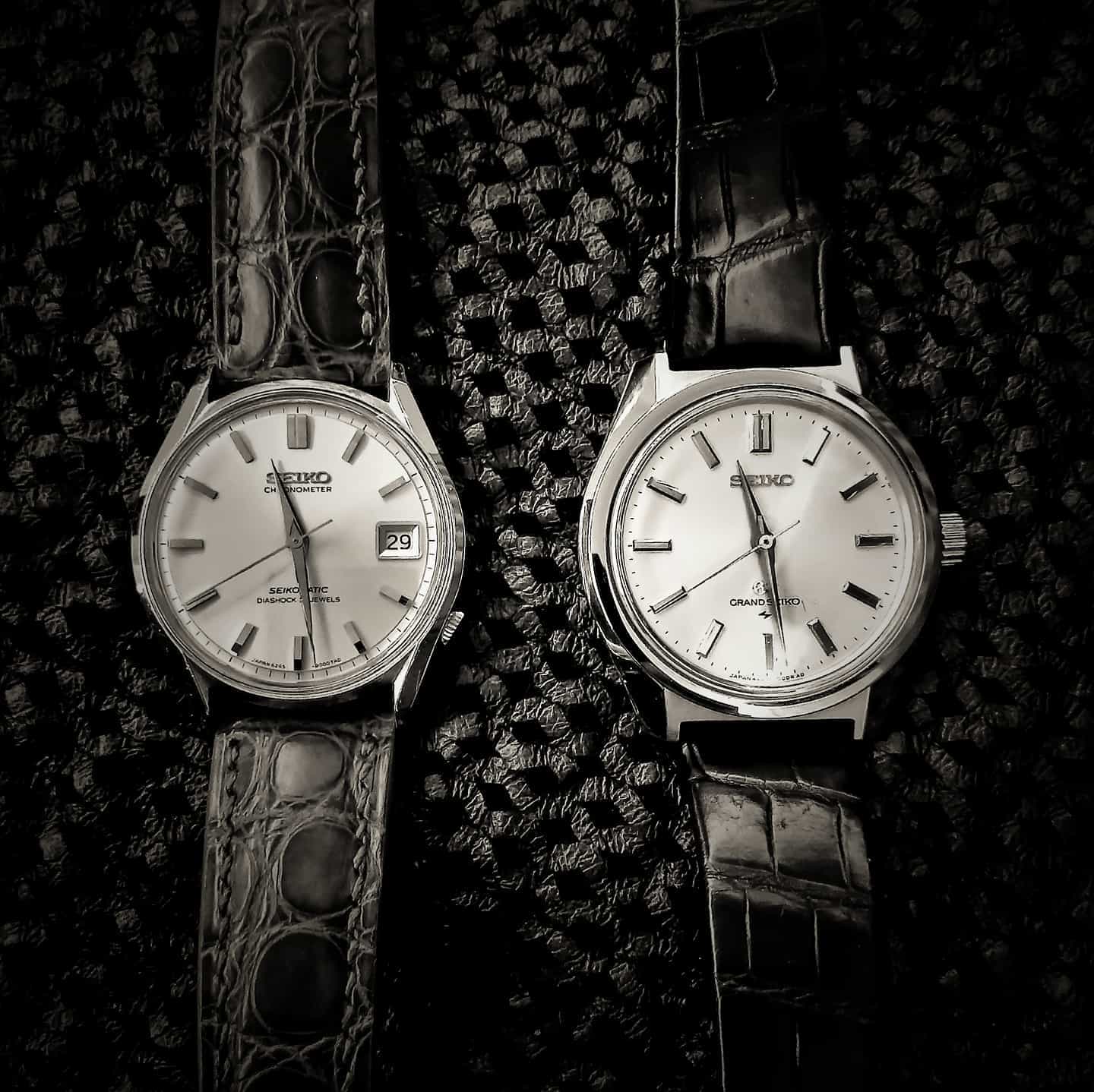
Grand Seiko 62GS 6245-9000
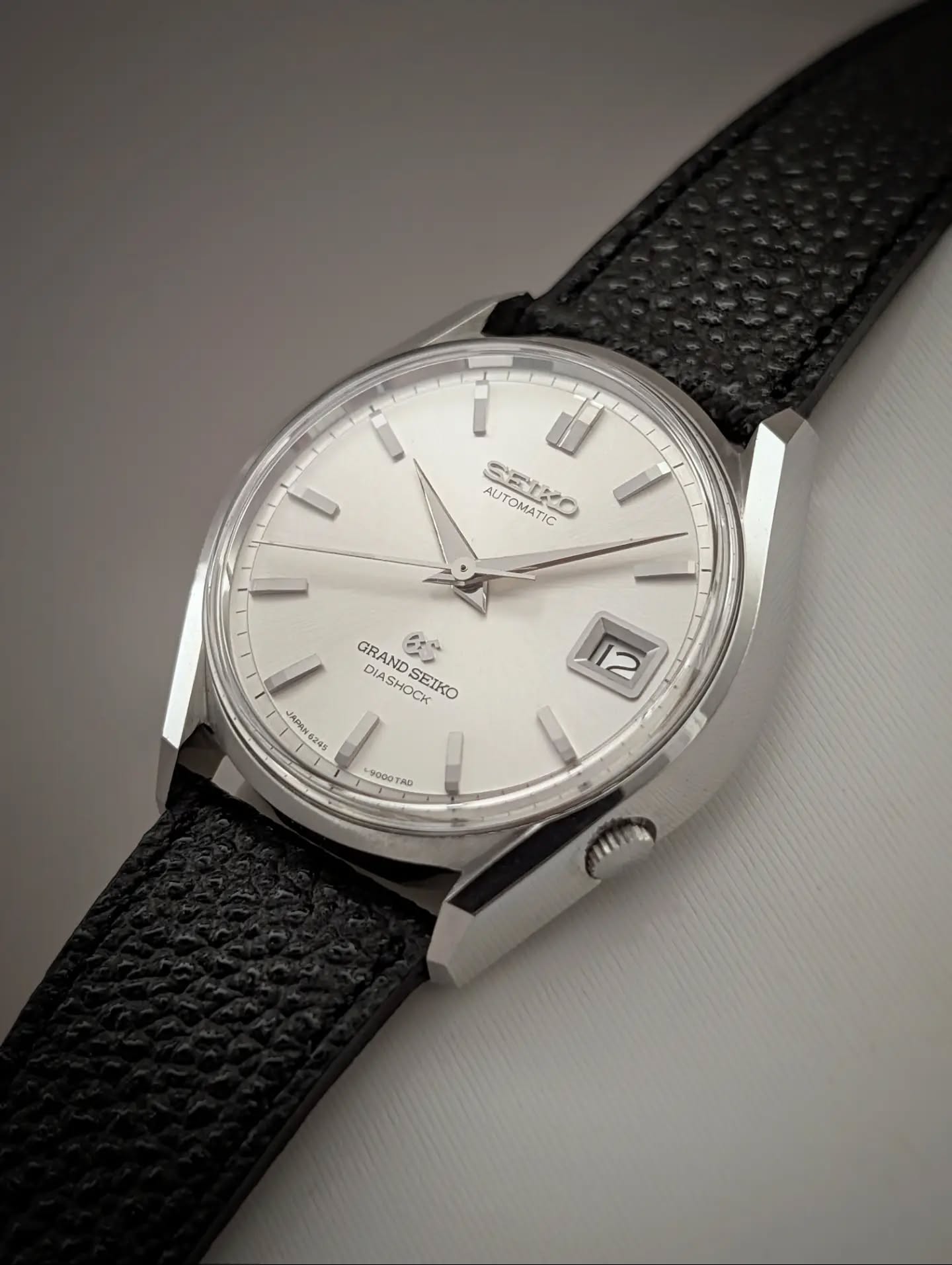
A little monolith
The 62GS holds together in a way I find endlessly satisfying. The case rises compactly around the dial, then gives way to that tall, box-shaped crystal. Without a separate bezel cutting across the metal, the whole case reads as a single, gently sloping volume.
The glass has room to breathe. It rises like a transparent canopy, allowing light into a composition that could otherwise have felt quite enclosed. The absence of a bezel is as important to the character of this watch as any individual facet.
A direct connection
This form came directly from the Seikomatic family. The Grand Seiko dial and medallion give the watch its identity, but the case retains the same formal intelligence. The compact crown at four o’clock seems to make the automatic movement almost visible as an idea: little need to wind, little crown.
I love that tiny crown, even though its size tests the limits of practicality. The larger crowns of the 57GS and the later 61GS make the difference immediately tangible.
The watch
| Reference | 6245-9000 |
|---|---|
| Family | 62GS |
| My example | December 1966 |
| Manufacture | Suwa Seikosha |
| Movement | 6245A · automatic |
| Functions | Hours, minutes, central seconds, date |
| Case | Stainless steel · bezel-free construction |
| Case width, without crown | 36.5 mm |
| Thickness, including crystal | 12.3 mm |
Dimensions measured on this example.
Beside the 44GS
When I first put this case design beside the 44GS, the contrast was striking. The 44 spreads outward; the 62 gathers itself into a compact, upright volume. My rough measurements suggested remarkably similar crystal diameters, despite how differently the two watches occupy the wrist.
That is what makes the comparison worth returning to. Diameter alone tells very little about presence. The direction of the surfaces, and the way the case meets the crystal, tell much more.