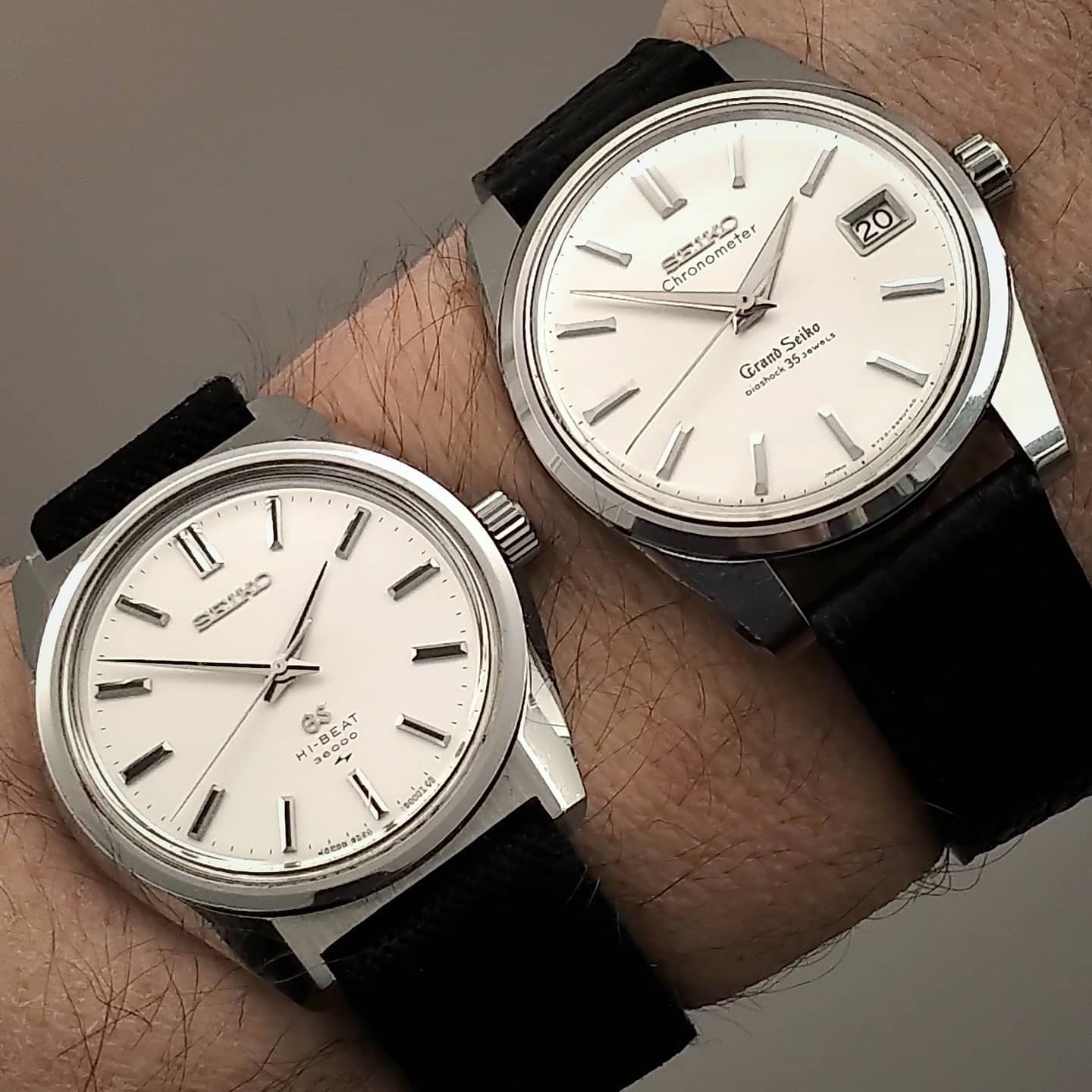
Grand Seiko 45GS 4520-8000
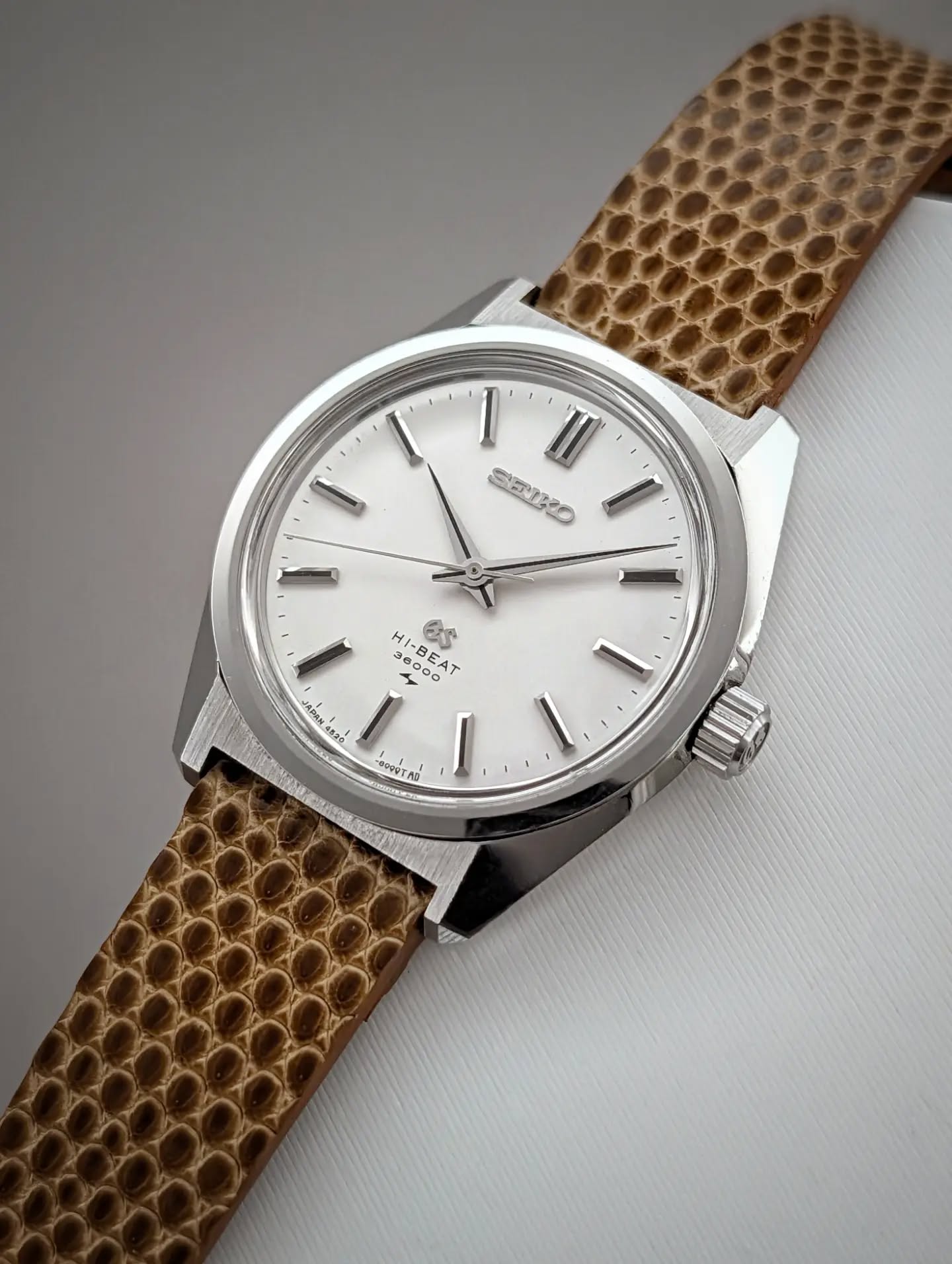
Cut for light
The 4520-8000 has a tension I find difficult to tire of. Its case holds close to the wrist, while the polished planes and sharply drawn edges keep the outline alert. The bezel and crystal sit low within the composition; the whole watch feels gathered and ready.
The dial contributes just as much as the case. Assertive long black accents run through the hands and markers, with the indices reaching out among the minute marks. Their polished facets can almost disappear in reflection, then resolve into solid shapes as the watch turns. It is an unusually forceful expression built from very few elements.
A racing rhythm
The brisk beat of the 4520A gives the experience its own atmosphere. Even the many sharp folds of the crown seem fitting for this tightly wound little machine. After a careful service, I found its stability deeply satisfying in everyday use: the engineering lives up to the promise of the shape.
The watch
| Reference | 4520-8000 |
|---|---|
| My example | February 1970 |
| Manufacture | Daini Seikosha |
| Movement | 4520A · manual wind |
| Beat rate | 36,000 vibrations/hour · 5 Hz |
| Functions | Hours, minutes, central seconds |
| Case | Stainless steel |
| Dial | Light dial with black accents |
| Case width, without crown | 36.1 mm |
| Thickness, including crystal | 9.2 mm |
Dimensions measured on this example.
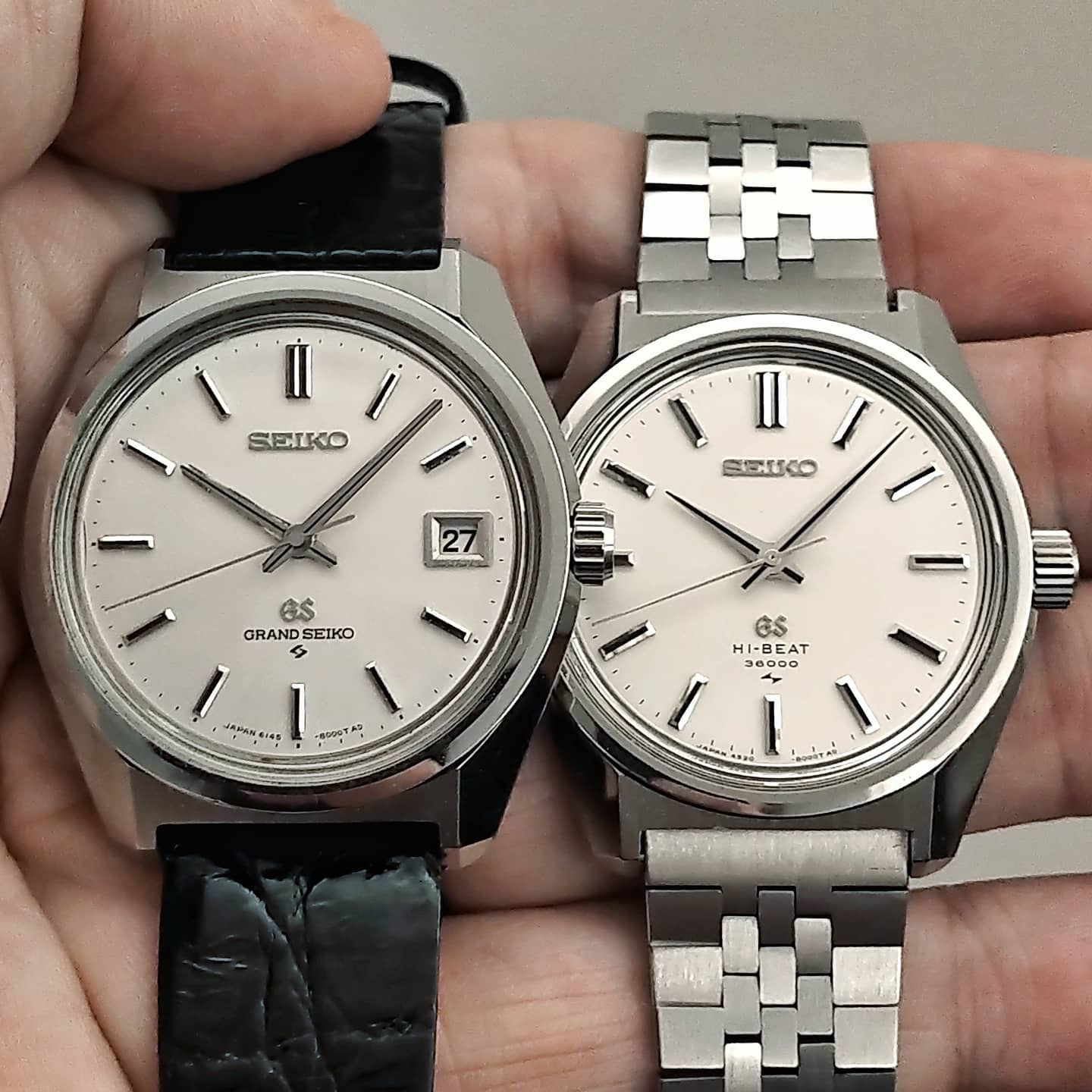
Beside the automatic 61GS
The 6145-8000 and this 45GS share a recognisable formal language, but their profiles have different priorities. The 61GS rises from the strap into square shoulders and a high case fold. The hand-wound 45 sits lower, with a more sloping, wrist-hugging outline.
The distinction continues across the dial. The 45’s long indices press towards the perimeter; the 61’s shorter ones sit within the minute track. These are two complete compositions, with separate relationships between case, dial and hands.
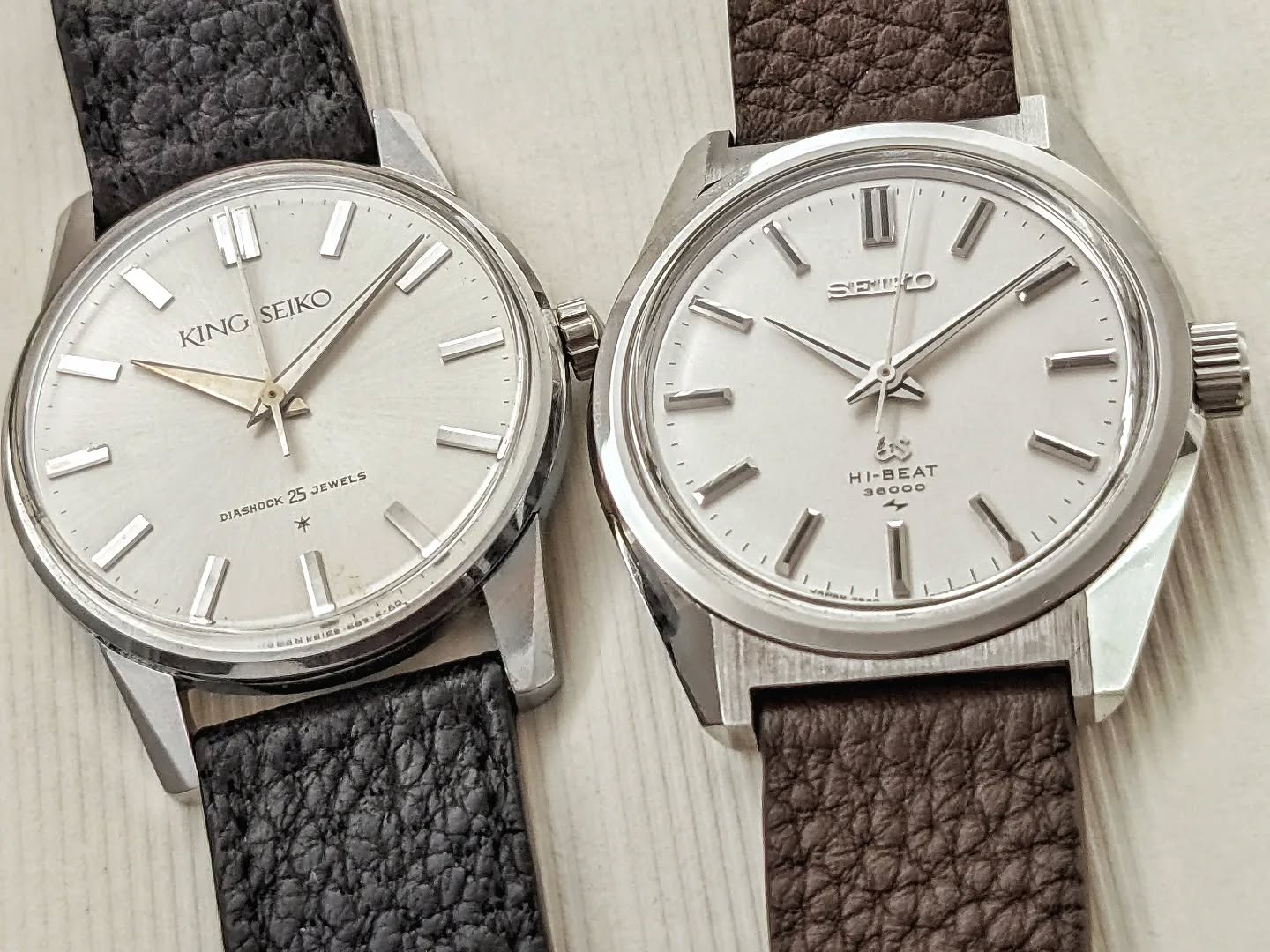
On either side of the 44GS
Putting the King Seiko 15034 beside the 4520-8000 makes the development of Seiko’s identity unusually clear. The early King Seiko belongs to the search for the essentials: a deliberately reduced set of planes, proportions and dial elements. The later Grand Seiko works within an identity that has become unmistakable, and begins to push it towards a much wider range of formal experiments.
The 44GS stands between them in that story. These two Daini handwinders let me see what came before that decisive composition, and what became possible after it.
Sharpness and poise
Beside the steel 5722-9990, the 45GS shows another side of Grand Seiko. Its sharp folds and black-accented dial make a forceful counterpoint to the almost sedate, softer shapes and monochrome polished furniture of the 57GS. The contrast runs through to their mechanical rhythms: a brisk high beat against the earlier watch’s slower cadence. I enjoy how completely each inhabits its own idea of elegance.