
Grand Seiko 44GS 4420-9000
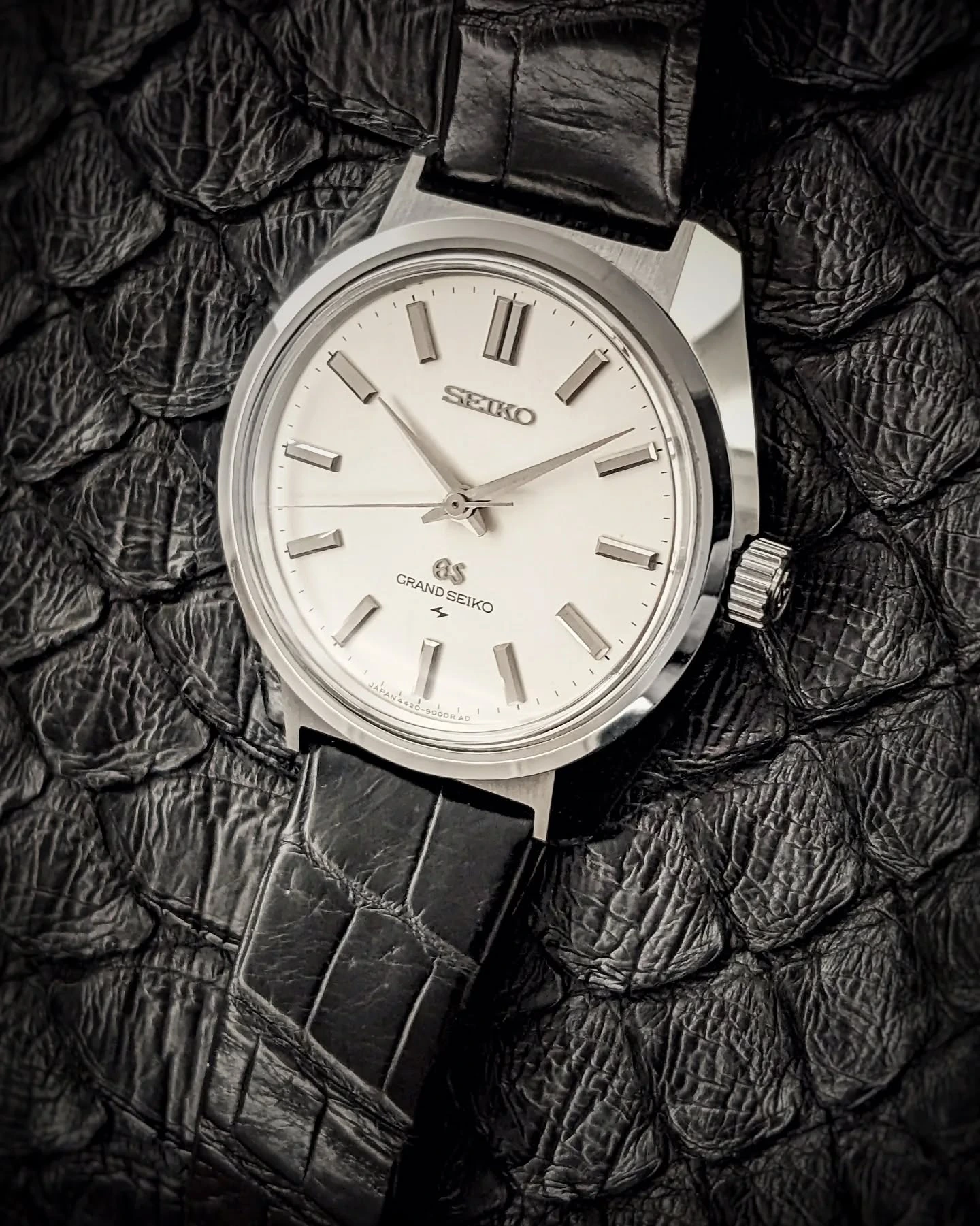
Why it matters
For me, this is where the early King Seiko experiments become a complete composition: case, lugs, bezel and the straight connection to the strap read as one coherent whole.
What I look at
The bezel and tall crystal take part in a sequence of slopes and counter-slopes. In profile, this is the to-and-fro movement I find so compelling.
Between the lugs, a straight case edge meets the strap directly. The junction completes the larger geometry.
The watch
| Reference | 4420-9000 |
|---|---|
| Family introduction | March 1967 |
| My example | August 1967 |
| Manufacture | Daini Seikosha |
| Movement | 4420B · manual wind |
| Functions | Hours, minutes, central seconds |
| Case material | Stainless steel |
| Case width | ≈ 37.9 mm, excluding crown |
| Overall height | ≈ 11 mm, including crystal |
| Surface character | Polished planes and a continuous case fold |
Approximate specimen dimensions, including the crystal in the overall height.
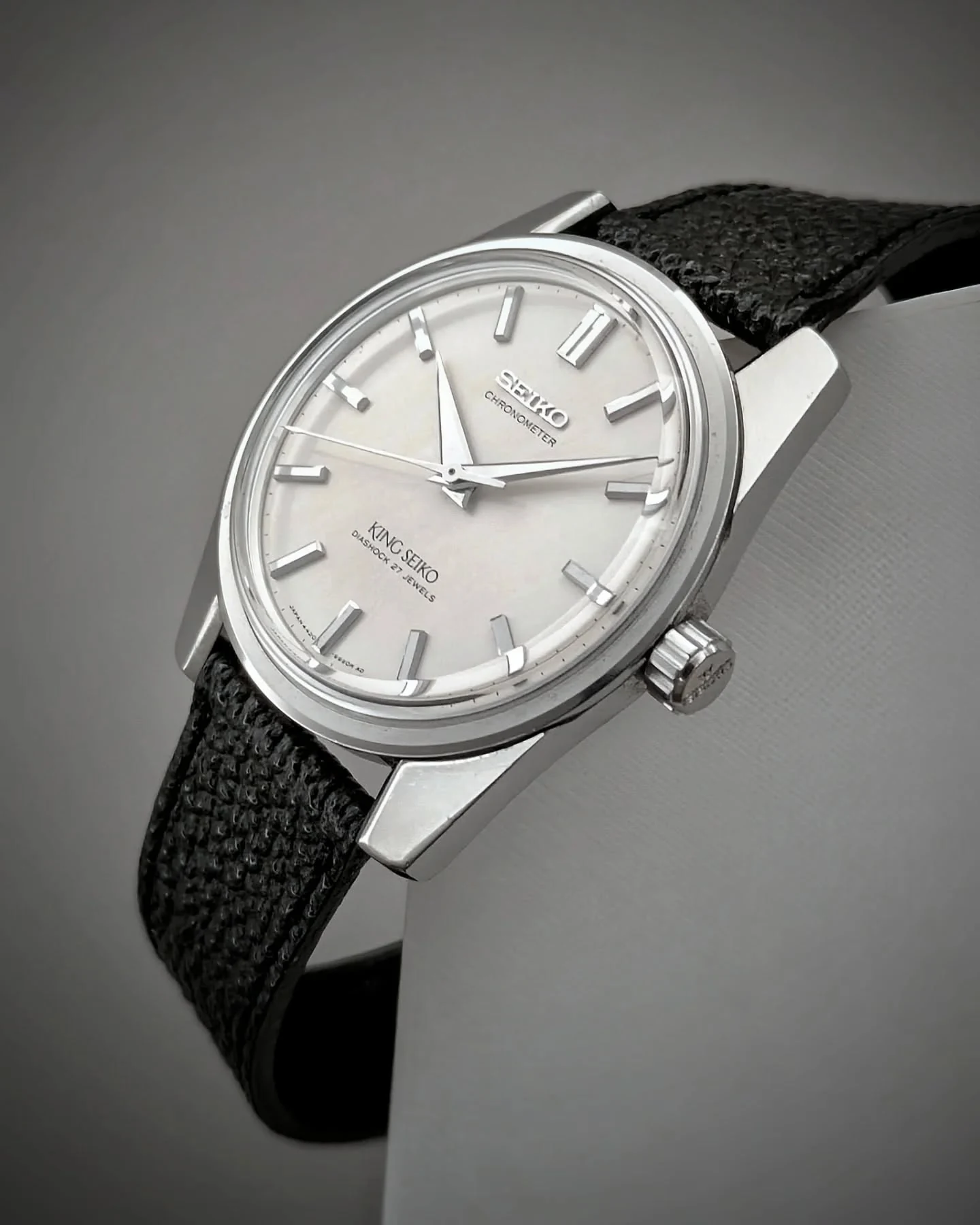
The King Seiko connection
The side edge that still belongs to the lug on the Chronometer continues through the whole case on the 44GS. The lower flank retreats beneath it.
Put the King Seiko Chronometer beside the 44GS. The outward flare of the bezel is already there; in the Grand Seiko, I read it as a stronger, more expansive version of the same gesture. The continuous fold below it changes how the whole case holds together.
A different expression in gold
The cap-gold Grand Seiko 4420-9990 belongs beside this watch, but its case does not reproduce the folded architecture of the steel 4420-9000. The possible role of the gold cap in that difference remains my working hypothesis.