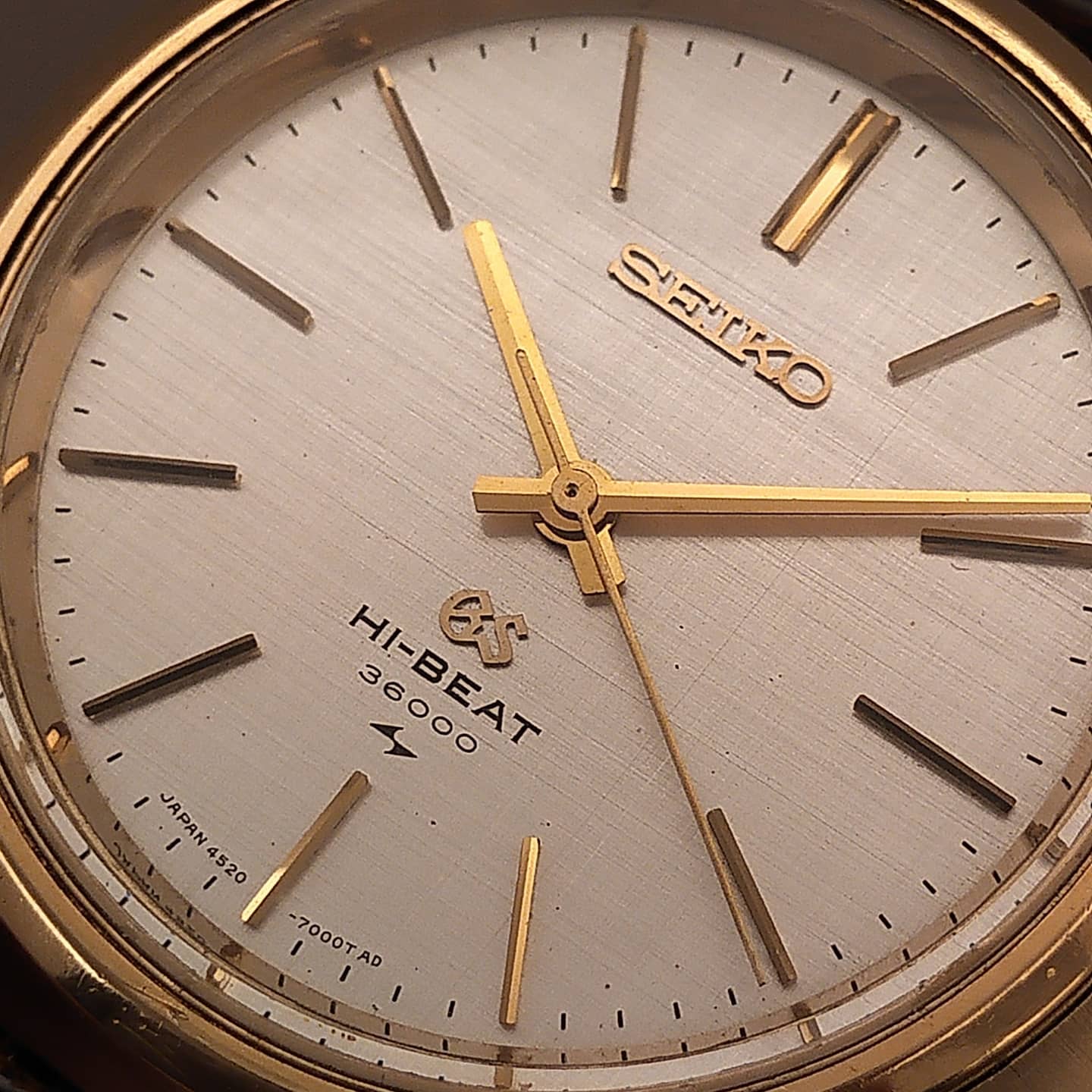
Grand Seiko 45GS 4520-7000
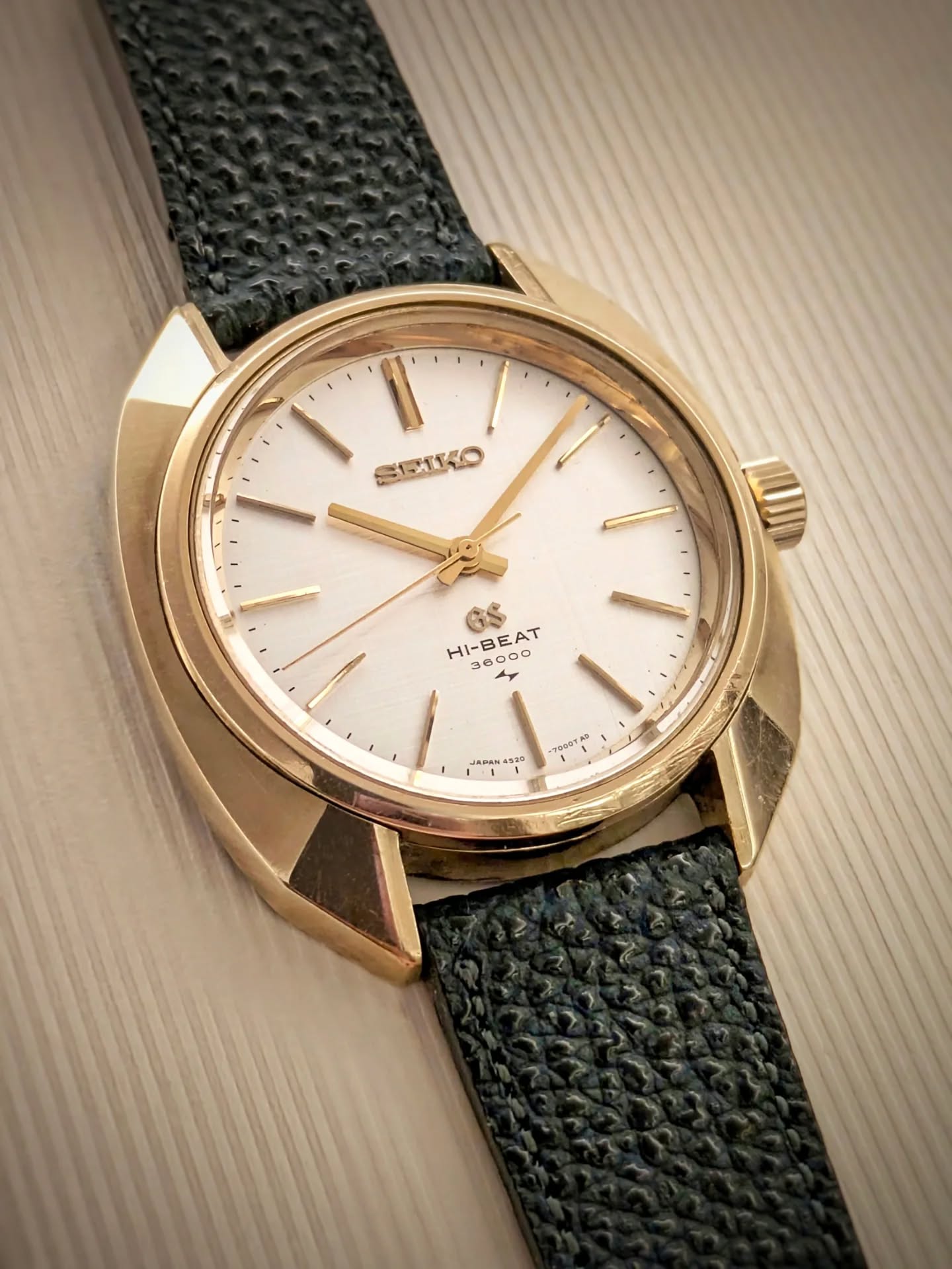
The golden batwing
The cap-gold 7000 is one of the places where the discipline of Seiko Style opens into something exuberant. Those broad, folded lugs give the case a generous sweep across the wrist. The outline is eccentric, but its edges remain remarkably deliberate.
My October 1969 cap-gold example brings a different kind of richness to that shape. The fine linen texture of the dial sits behind gold markers, hands and lettering. In good light the small details become wonderfully clear: the texture stays quiet, while the metal catches and releases the light.
A fast heart, carefully kept
This is also the watch that taught me about the other side of the 45’s intensity. A mainspring failure damaged teeth on the barrel and second wheel; suitable parts and a careful repair brought it back. That experience has stayed with me alongside the pleasure of its remarkably steady timekeeping. The strange, expansive shape houses a very serious machine.
The watch
| Reference | 4520-7000 |
|---|---|
| My example | October 1969 |
| Manufacture | Daini Seikosha |
| Movement | 4520A · manual wind |
| Beat rate | 36,000 vibrations/hour · 5 Hz |
| Functions | Hours, minutes, central seconds |
| Case | Cap gold |
| Dial | Light linen dial with gold furniture |
| Case width, without crown | 37.1 mm |
| Thickness, including crystal | 9.1 mm |
Dimensions measured on this example.
A linen-dial connection
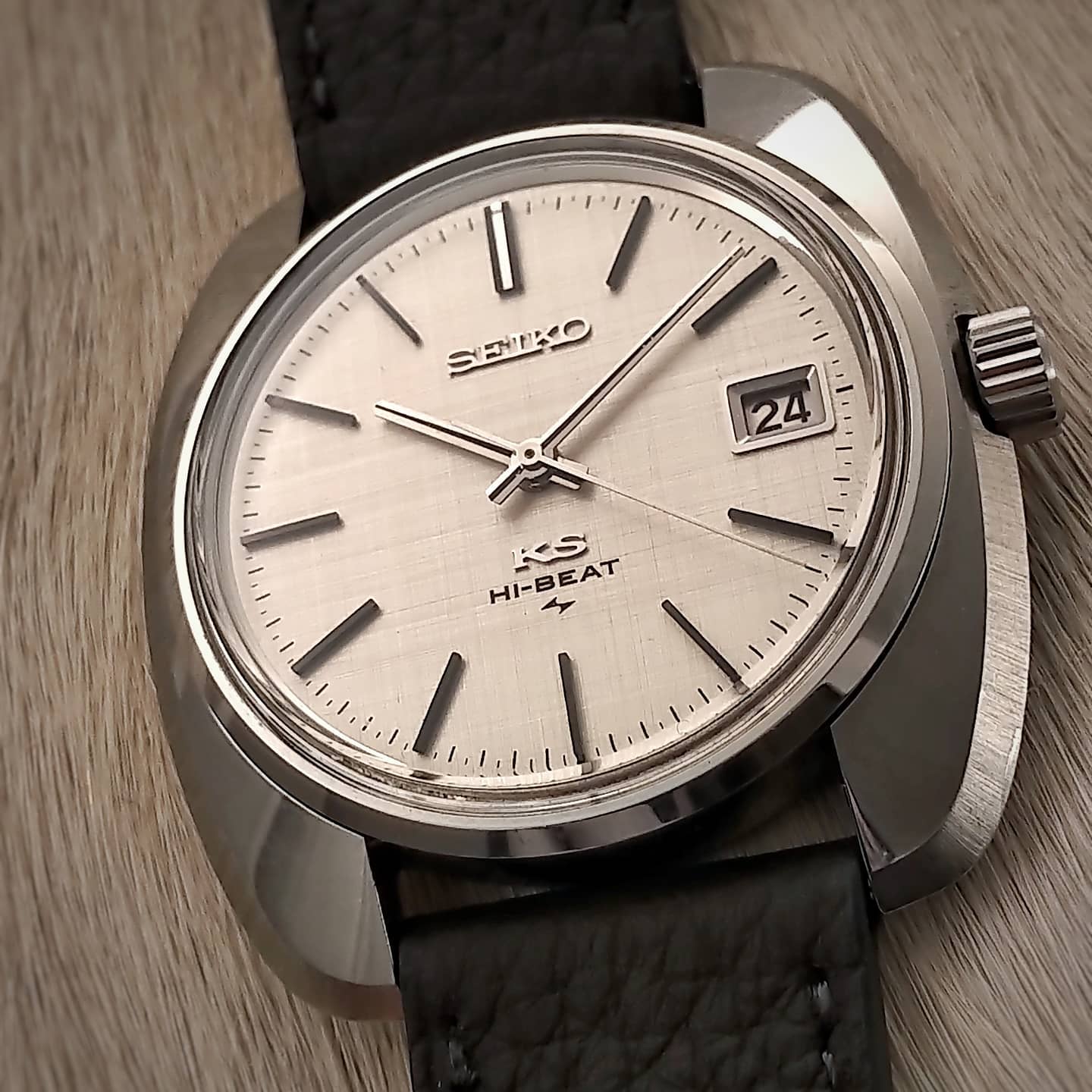
The King Seiko 4502-8000 led me to look again at the cap-gold 7000. Both give the hand-wound 45 movement an unusually expansive case, moving away from the stricter outline of the familiar Seiko Style designs. The relationship becomes more specific on the dial: the linen texture, marker shapes and hands look remarkably close.
I first noticed that resemblance with the watches together and photographed the two dials separately to examine it. The apparent continuity of the small parts is especially interesting within two such distinctive case shapes.