Grand Seiko 57GS 5722-9011
A different kind of 57
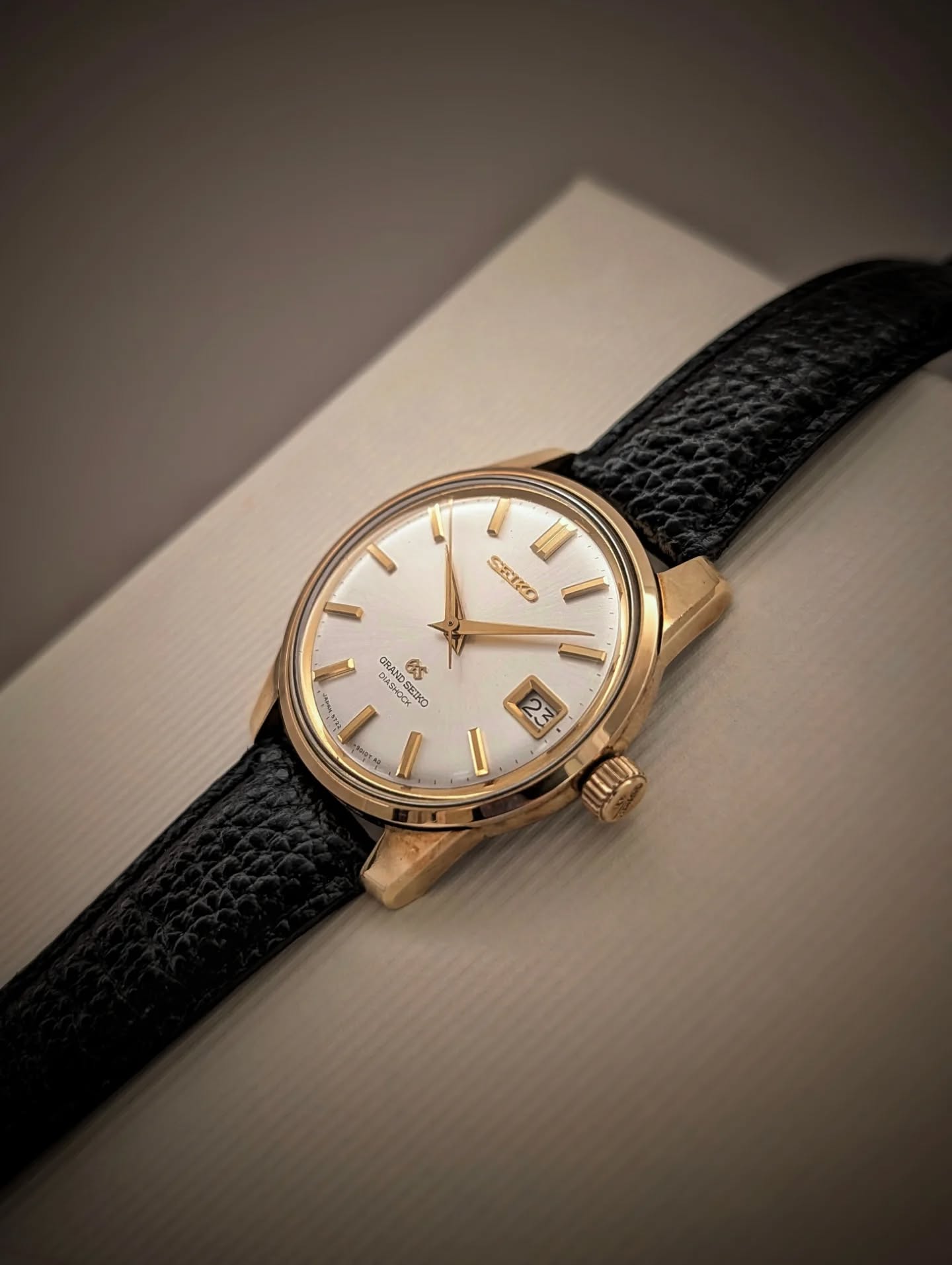
This July 1967 example has become my favourite 57GS. Its appeal begins with the scale: a compact case, narrow strap and a warm, luminous dial. There is a generosity to the curved profile and domed crystal that feels closely connected to the first Grand Seiko.
The sunburst is particularly expressive. As the light changes, the dial can move from a quiet pale surface to something much warmer, while the polished case alternately catches and releases the light. It is a watch I keep photographing because no single view quite contains it.
A quiet rhythm
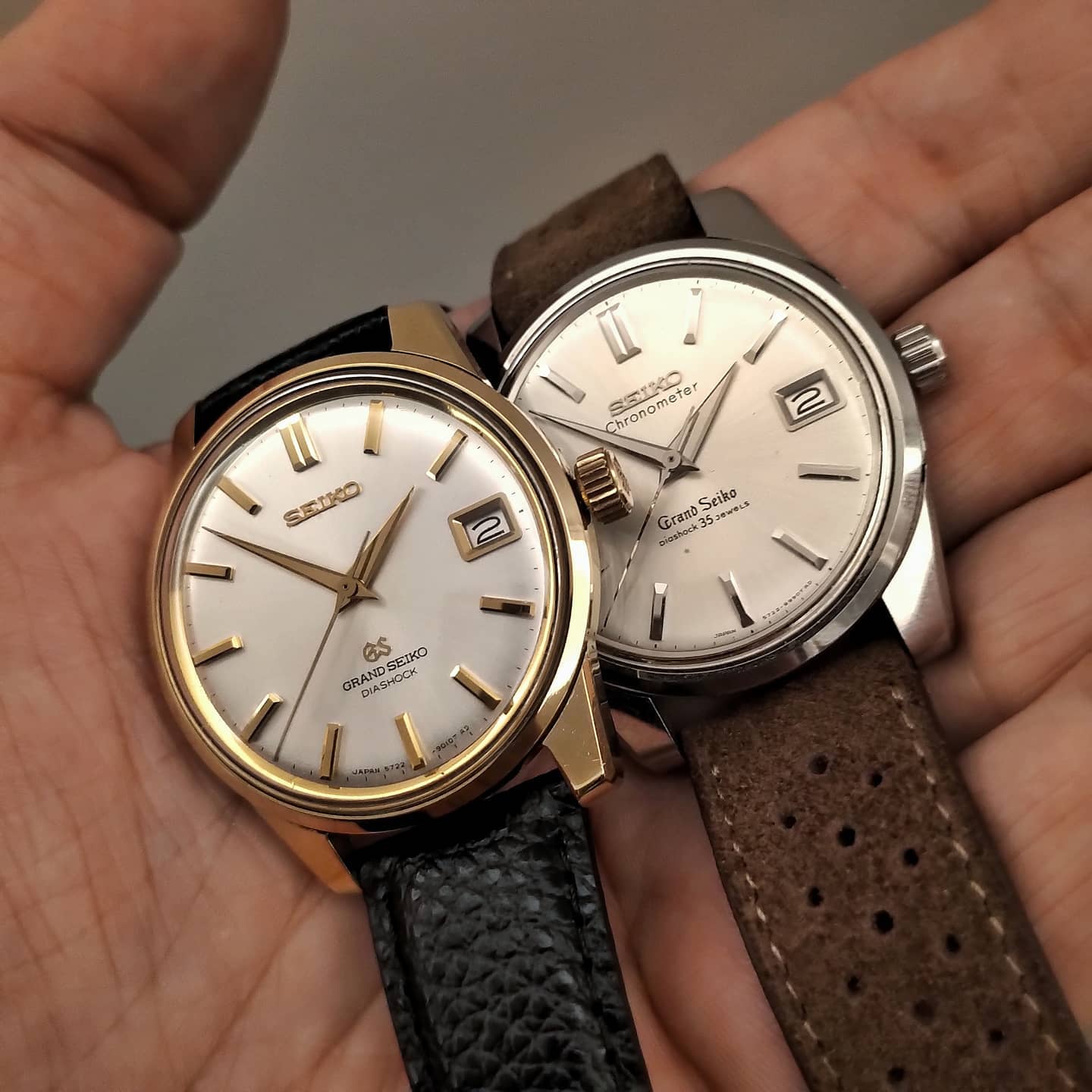
The markers are more straight-edged than the generously chamfered ones on my steel 5722-9990. They reach out into the minute track, replacing its marks at the hours and drawing attention towards the dial’s perimeter.
What I particularly like is the repetition of one marker form, doubled at twelve. That modest change is enough to orient the dial without introducing another competing size. It keeps the composition calm: the eye follows a rhythm around the face rather than being pulled towards an emphatic cross.
In use
The later 5722B gives this example a slightly quicker beat than my 5722A steel watch. I have often returned to the firm, fresh feeling of this movement in use. Its appeal is wonderfully ordinary: a good hand-wound watch, with a useful date, that makes putting it on a pleasure.
The watch
| Reference | 5722-9011 |
|---|---|
| My example | July 1967 |
| Manufacture | Suwa Seikosha |
| Movement | 5722B · manual wind, date |
| Beat rate | 19,800 vibrations/hour · 2.75 Hz |
| Jewels | 35 |
| Case | Cap gold |
| Crystal profile | Domed |
| Case diameter | 36 mm |
| Strap width | 18 mm |
Two cases, two characters
Beside the steel 5722-9990, the differences go beyond colour. This case measures 36 millimetres, with an 18-millimetre strap opening; the steel watch is larger and takes a 19-millimetre strap. The lugs also meet the case differently, losing the tangential connection I admire on the steel version.
Those changes give the cap-gold watch its own proportions and expression. It is also a useful reminder to examine each pair on its own terms when comparing steel and gold-finished cases: this particular gold model is the smaller one.