King Seiko 44KS 4402-8000
A compact turn in the story
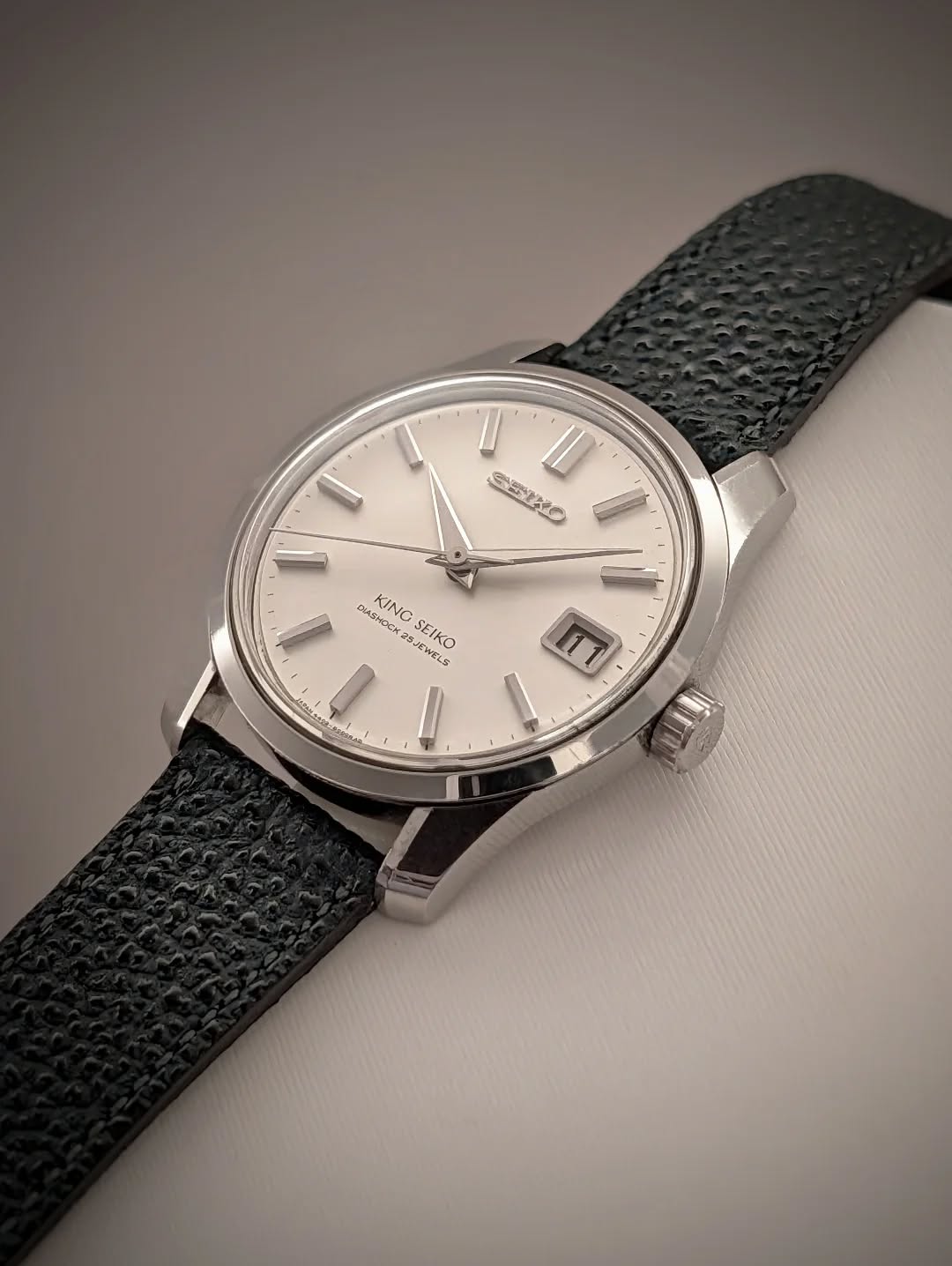
After the growing presence of the Firsts, the KSK and the Chronometer, the 4402 surprised me by becoming smaller. My steel example, from December 1966, is 35 millimetres across. Its broad lugs, firm bezel and substantial markers give it considerably more presence than that number suggests.
The date is an important part of its character. It brings an everyday usefulness to this early hand-wound King Seiko without disturbing the calm arrangement of the dial. The round case remains traditional, but the planes and edges give it a very particular discipline.
Curve and structure
The lugs have a slight curve that softens their otherwise solid outline. Their polished tops and clearly defined edges still belong to the world of the earlier King Seikos. The watch feels compact and assured, with enough weight in its forms to avoid becoming delicate.
Across the flat dial, straight hands and box-like markers maintain that clarity. The minute track runs continuously outside the markers, leaving a small but telling interval before the bezel. It is one of those modest decisions that gives the whole composition room to breathe.
A watch to use
The crown is a particular pleasure: large enough to grasp easily, with coarse knurling, yet entirely in proportion to the small case. Winding it feels like a natural part of wearing it.
I have repeatedly been struck by how well these 44-family movements behave in daily use. The appeal is as much in that dependable, unshowy experience as in the sharply preserved surfaces. This is a watch I enjoy returning to after time away from it.
The watch
| Reference | 4402-8000 |
|---|---|
| My example | December 1966 |
| Manufacture | Daini Seikosha |
| Movement | 4402A · manual wind, date |
| Beat rate | 18,000 vibrations/hour · 2.5 Hz |
| Jewels | 25 |
| Case | Stainless steel |
| Case diameter | 35 mm |
SGP, February 1966
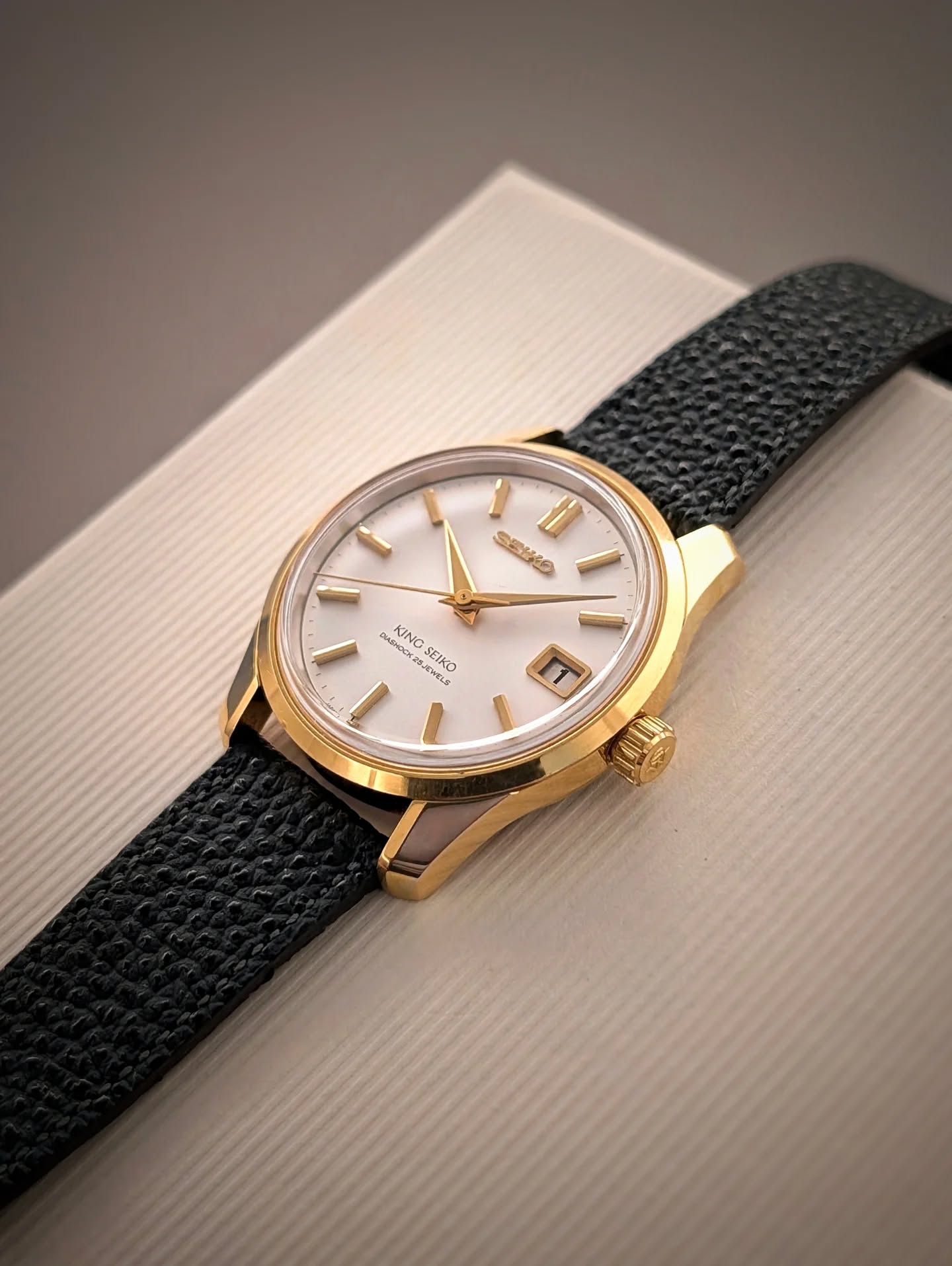
The SGP example arrived later in my collection, although it was made earlier, in February 1966. Finding one with such crisp, largely untouched edges had taken patience. Its vivid gold finish makes the meeting of those planes especially easy to read.
The flat crystal, clear dial and satisfyingly coarse crown preserve the directness of the steel watch. Gold adds warmth to an outline that remains firmly structured. This example also came with its original box, buckle and papers; what mattered most to me was how clearly the case still expressed its shape.
| Reference | 4402-8000 |
|---|---|
| My example | February 1966 |
| Movement | 4402A · manual wind, date |
| Beat rate | 18,000 vibrations/hour · 2.5 Hz |
| Case | SGP · gold-plated |
| Case diameter | 35.6 mm |
Beside the cap-gold 57GS
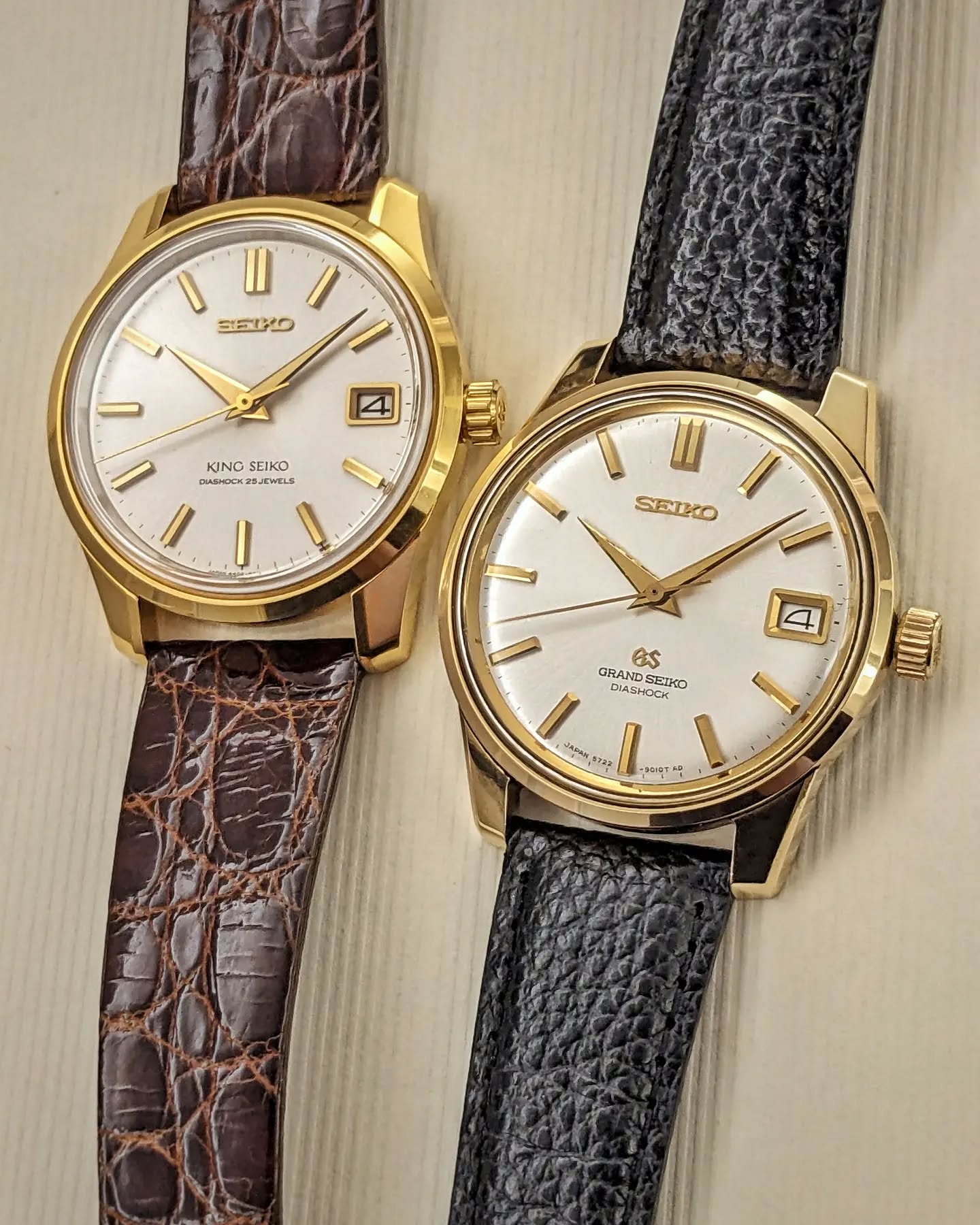
Putting the SGP 4402 beside my cap-gold 5722-9011 makes two different kinds of restraint visible. The King Seiko keeps the sharper, more platonic edges; the Grand Seiko tempers its outline with bevels. The KS markers sit within an uninterrupted minute track, while the GS markers reach into it. Similar ingredients produce quite different expressions.