King Seiko 56KS 5626-5030
Several geometries at once
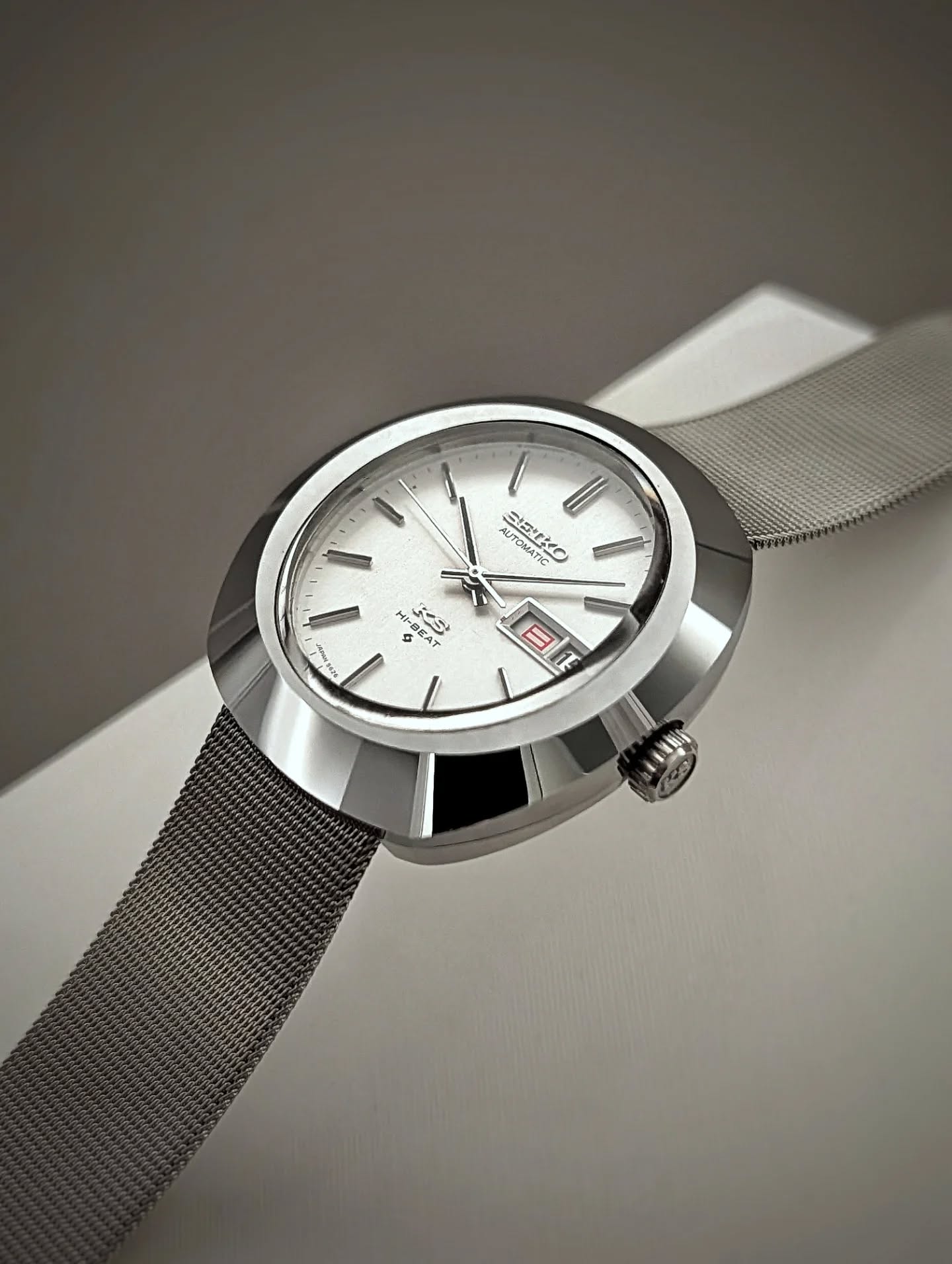
What appears to be the upper case of this watch is really an extraordinary bezel. Its rounded-square perimeter, circular upper edge and upright oval dial opening seem to be negotiating with one another at every angle.
The dark, tungsten-carbide surface gives those transitions a very particular sheen. Against it, the delicately vertical brushing of the dial feels unexpectedly quiet. This is an outlandish watch, but the contrast within it is carefully controlled.
An unusually expensive King Seiko
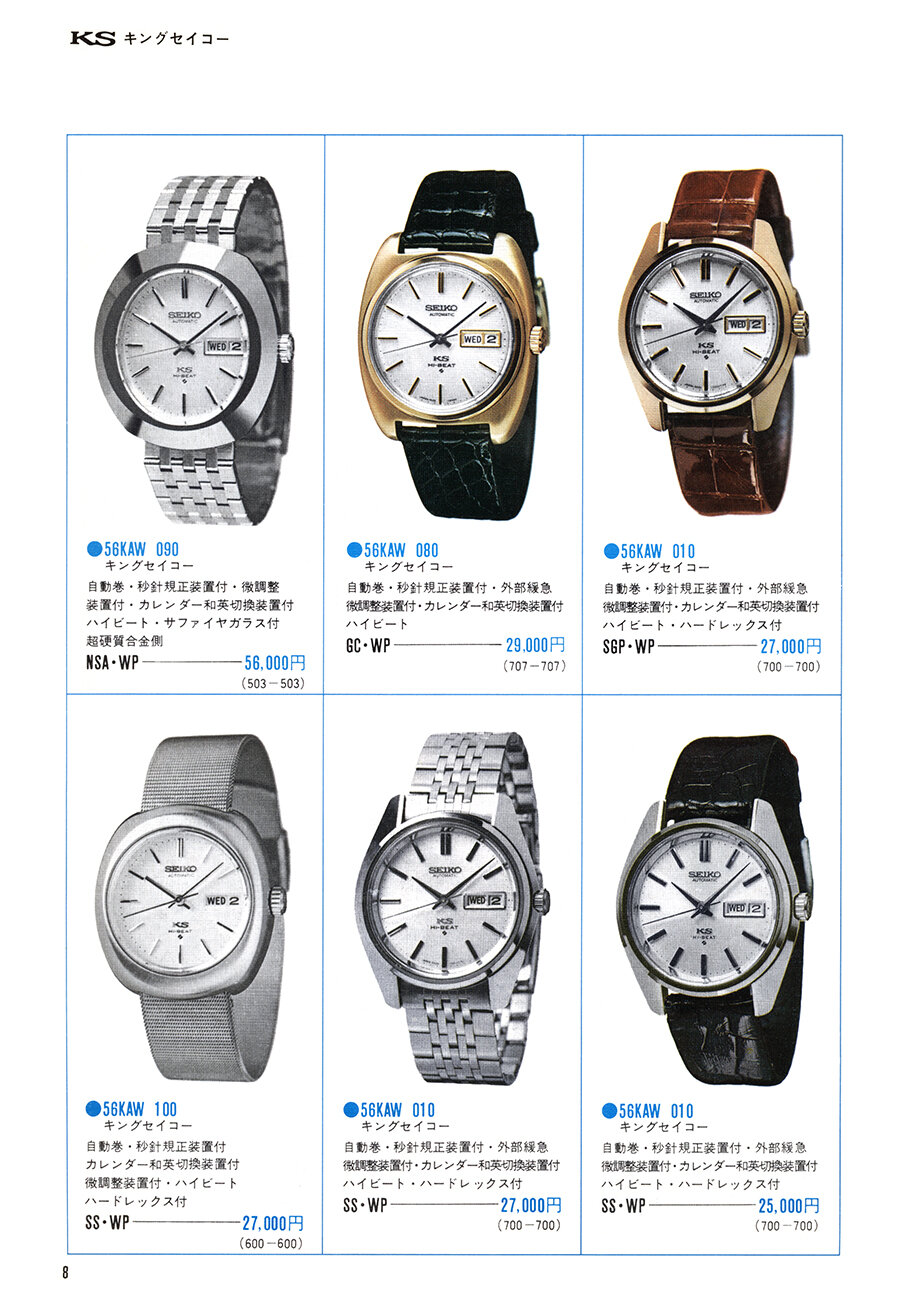
The 5030’s extravagance was not confined to its shape. With its tungsten-carbide bezel and sapphire crystal, it occupied a surprisingly expensive corner of the King Seiko range. Finding its original catalogue price gave this already improbable watch another dimension: this was an ambitious proposition, even beside a Grand Seiko Special.
The watch
| Reference | 5626-5030 |
|---|---|
| My example | October 1970 |
| Family | King Seiko · 56KS |
| Manufacture | Suwa Seikosha |
| Movement | 5626 · automatic, day and date |
| Beat rate | 28,800 vibrations/hour · 4 Hz |
| Case | Steel base · tungsten-carbide bezel |
| Case width, without crown | 36.2 mm |
| Thickness, including crystal | 11.5 mm |
Dimensions measured on this example.
More than a Grand Seiko Special
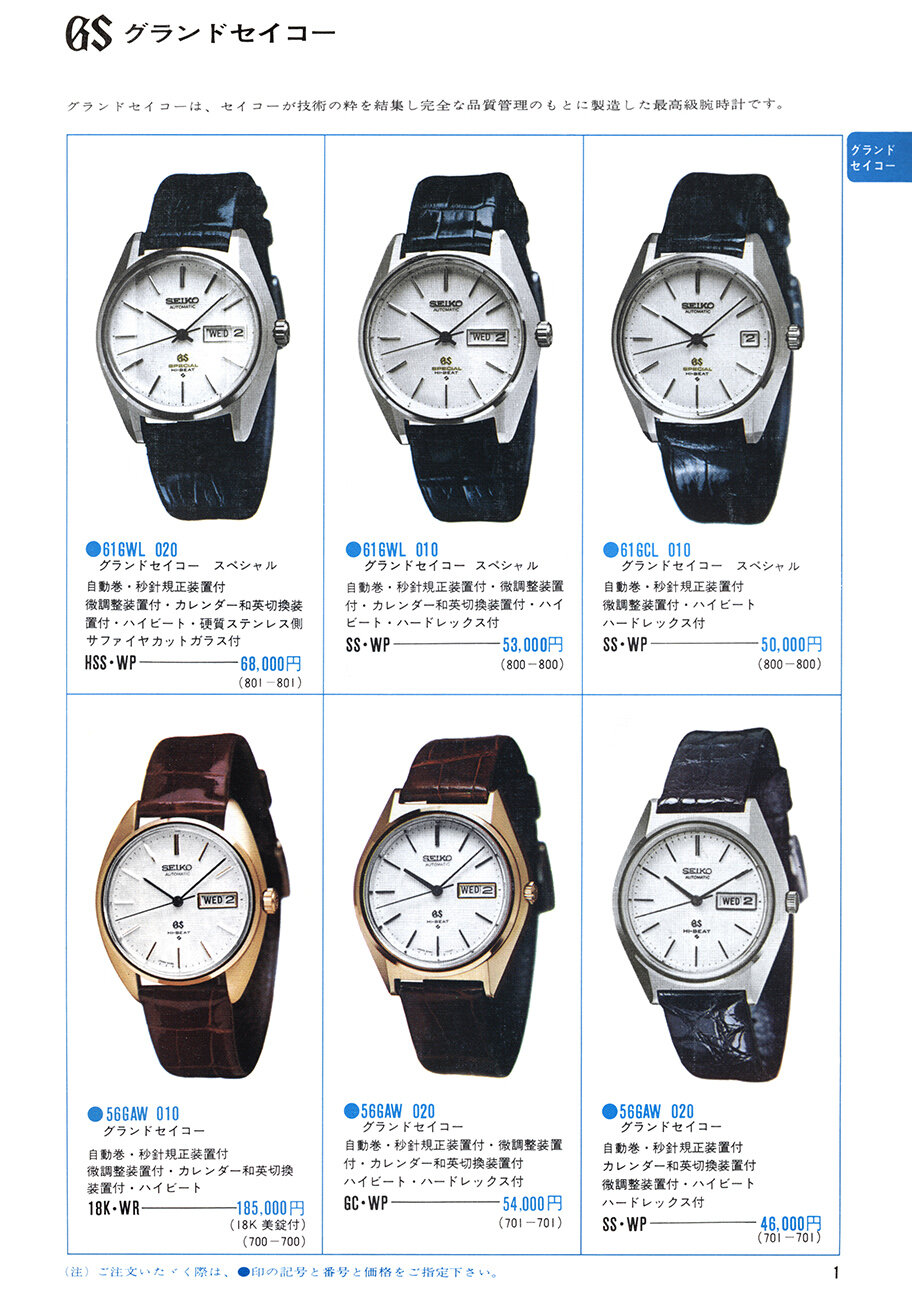
The 1971 No.1 Japanese catalogue lists the 5626-5030 at ¥56,000, against ¥53,000 for the day-date Grand Seiko Special 6156-8000. A full ¥3,000 more.
The King Seiko is shown on a metal bracelet, the Grand Seiko on a leather strap. These are the prices of those complete watches. Even with that distinction, I find the positioning remarkable: this unconventional King Seiko could ask more than a Grand Seiko bearing the word “Special”.