
King Seiko 56KS 5621-7000
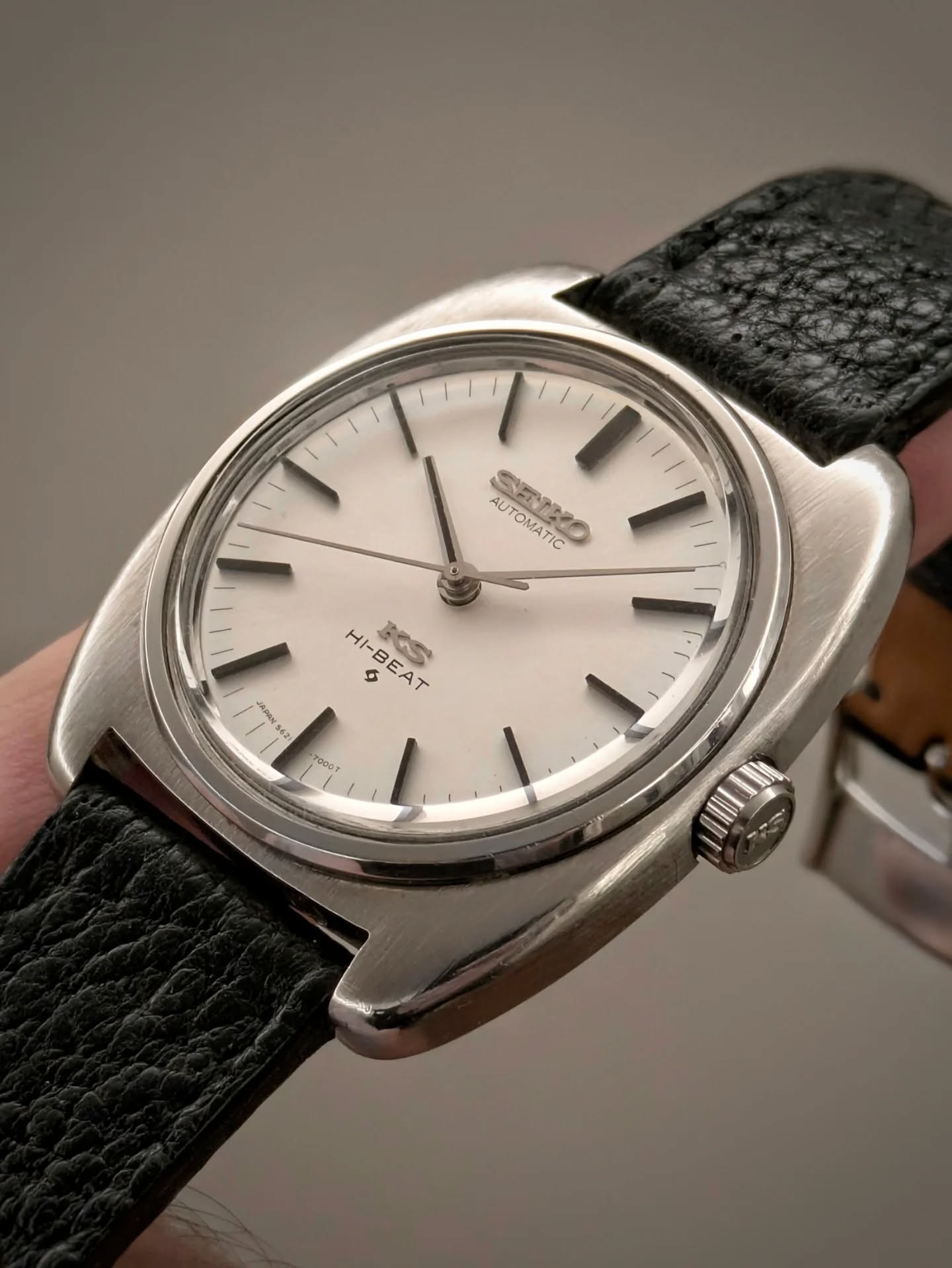
Soft brutalism
The 5621-7000 can look almost ordinary among the more angular King Seikos. On the wrist that first impression dissolves. There is real tension between the warm, brushed curves and the determined squareness of the case. The geometry is softened, but it is never vague.
On the silver dial, the long black accents and fine hands stretch the composition outward. The minute hand reaches into the minute track, while the stronger accent on the hour hand makes a quick glance useful too. This is the kind of practical intelligence I find as satisfying as the shape itself.
The watch
| Reference | 5621-7000 |
|---|---|
| My example | April 1970 · steel, silver dial |
| Family | King Seiko · 56KS |
| Manufacture | Suwa Seikosha |
| Movement | 5621 · automatic, time only |
| Beat rate | 28,800 vibrations/hour · 4 Hz |
| Case | Stainless steel |
| Case width, without crown | 35.9 mm |
| Thickness, including crystal | 10.1 mm |
Dimensions measured on this example.
Blue dial
The muted blue gives the same cushion case a different atmosphere. In my earlier photographs I kept returning to the pale grey, almost creamy tone of the markers: much subtler than a simple white-on-blue contrast.
The dial changes markedly with the light. I enjoy that ambiguity without pretending to know exactly how its colour looked when the watch was new.
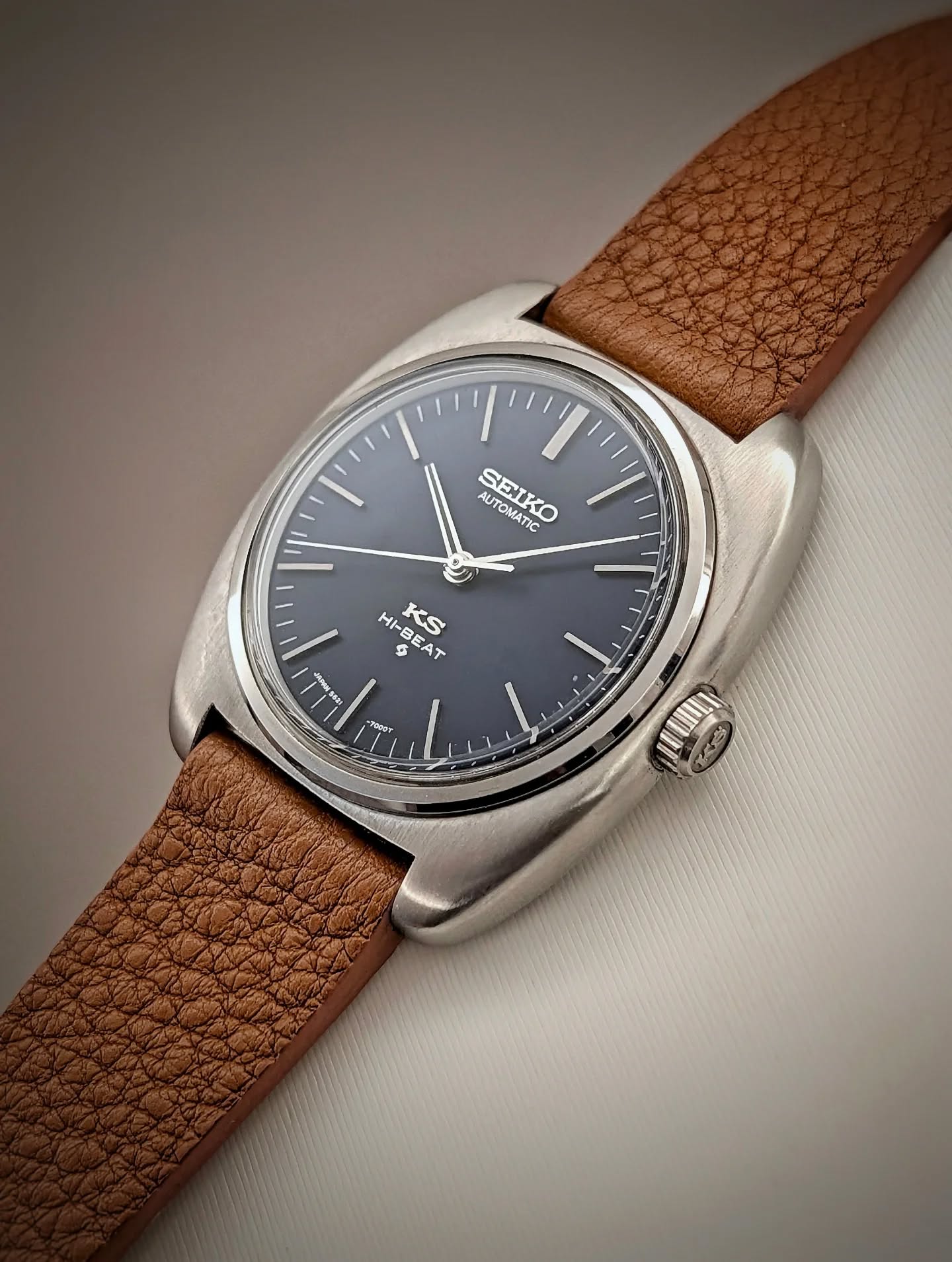
| My example | October 1971 |
|---|---|
| Case | Stainless steel |
| Dial | Blue · stick markers |
| Case width, without crown | 35.9 mm |
| Thickness, including crystal | 10.1 mm |
Dimensions measured on this example.
Cap gold
The cap-gold version gives these generous curves a warm, almost soft-armoured presence. Its wider bezel is an equally important part of that change in character.
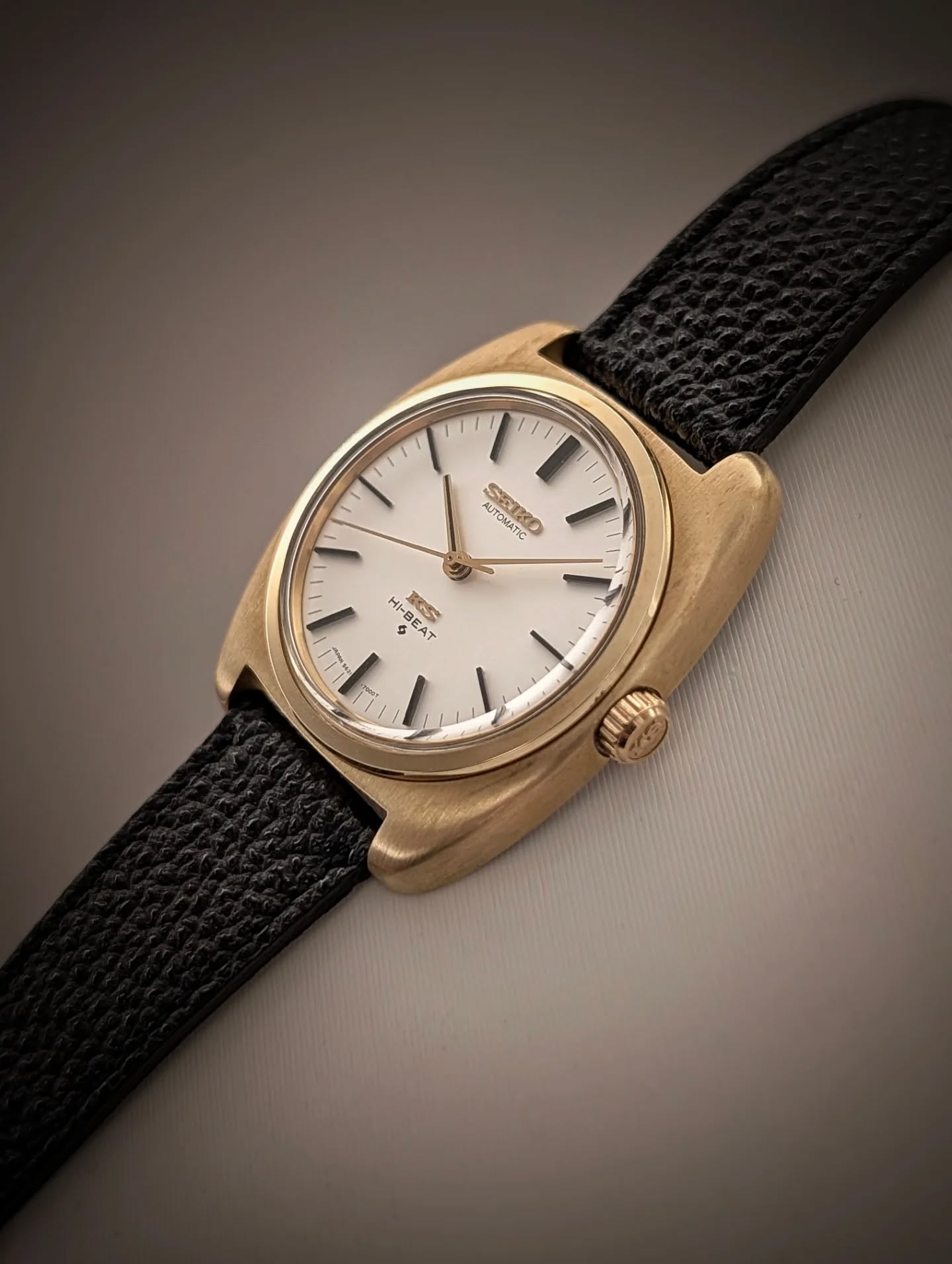
| My example | May 1971 |
|---|---|
| Case | Cap gold |
| Dial | Silver-toned |
| Case width, without crown | 36.9 mm |
| Thickness, including crystal | 10.1 mm |
Dimensions measured on this example.
A millimetre worth noticing
My steel examples measure 35.9 mm across, while the cap-gold example measures 36.9 mm. All three are 10.1 mm thick. The cap-gold bezel is visibly broader, too.
My working theory is that Seiko retained the same underlying steel case and added the gold cap to it. That would be a persuasive economy of production: use the established case rather than make a narrower steel body specifically for the gold version. The added gold would then account for the wider exterior.
With the dial diameter unchanged, a broader bezel would bridge that extra width. I read its shape as a response to the added material. Similar increases in other cap-gold cases, and smaller increases in SGP examples, make this the most convincing explanation to me.