King Seiko 52KS 5246-6060
Blue, with an edge
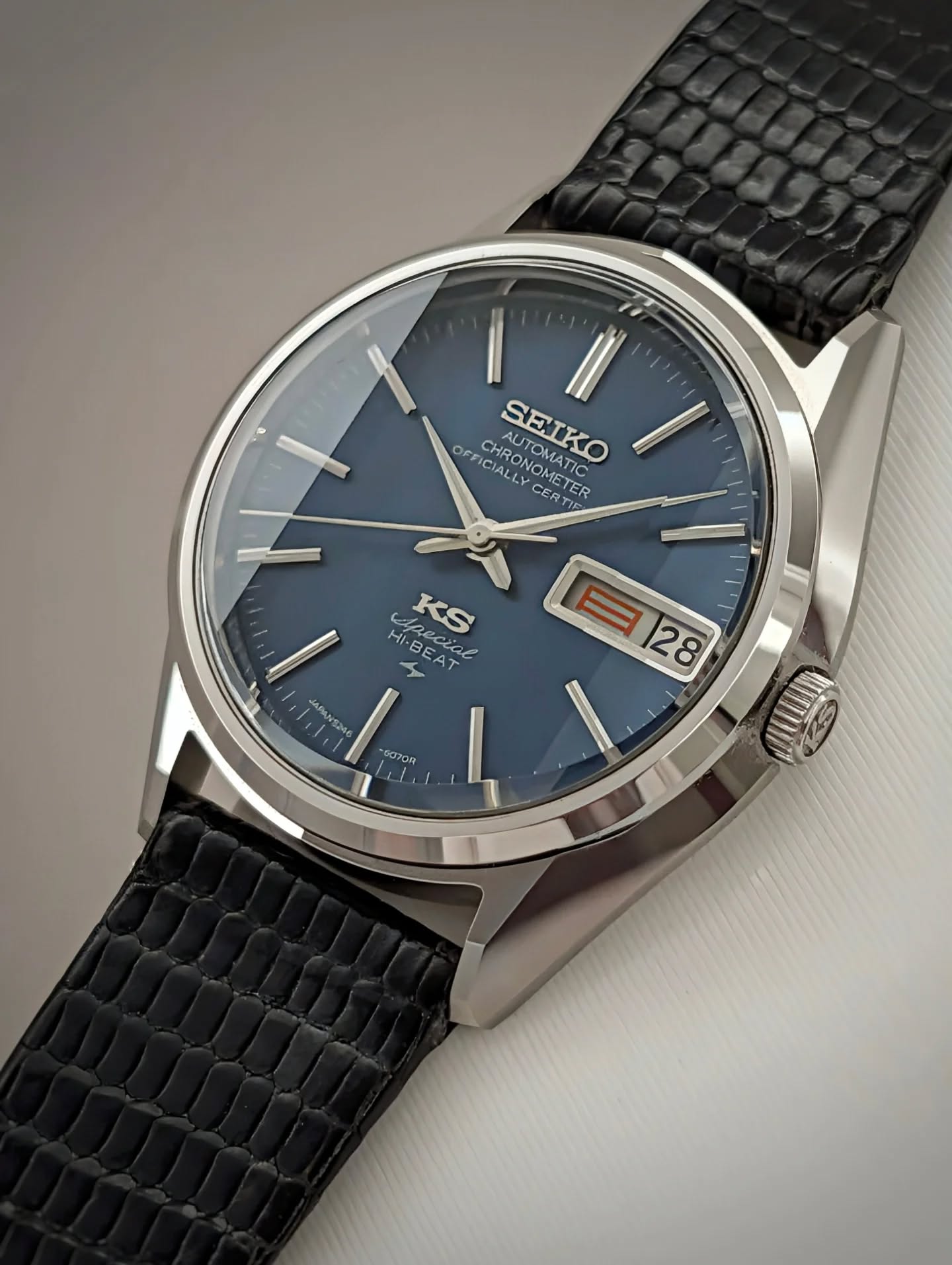
The blue 6060 takes a compact 52KS case and gives the eye several reasons to stay. Colour pulls me in first; then the cut crystal moves a band of light across the dial and the polished bezel answers it.
Where the light changes
The blue dial has a fine vertical grain. The markers establish a clear radial structure over it, while the crystal adds changes in reflection that follow their own geometry.
The case is slim at the lugs and distinctly angular where the upper planes meet the polished edges. Against that framework, the relatively broad bezel makes the dial opening feel concentrated. There is very little spare space, but the different surfaces remain readable.
The watch
| Reference | 5246-6060 |
|---|---|
| My example | November 1972 |
| Family | King Seiko 52KS |
| Manufacture | Daini Seikosha |
| Movement | 5246A · automatic, day and date |
| Beat rate | 28,800 vibrations/hour · 4 Hz |
| Case | Stainless steel |
| Case width, without crown | 34.9 mm |
| Thickness, including crystal | 10.5 mm |
Dimensions measured on this example.
The apparent twin
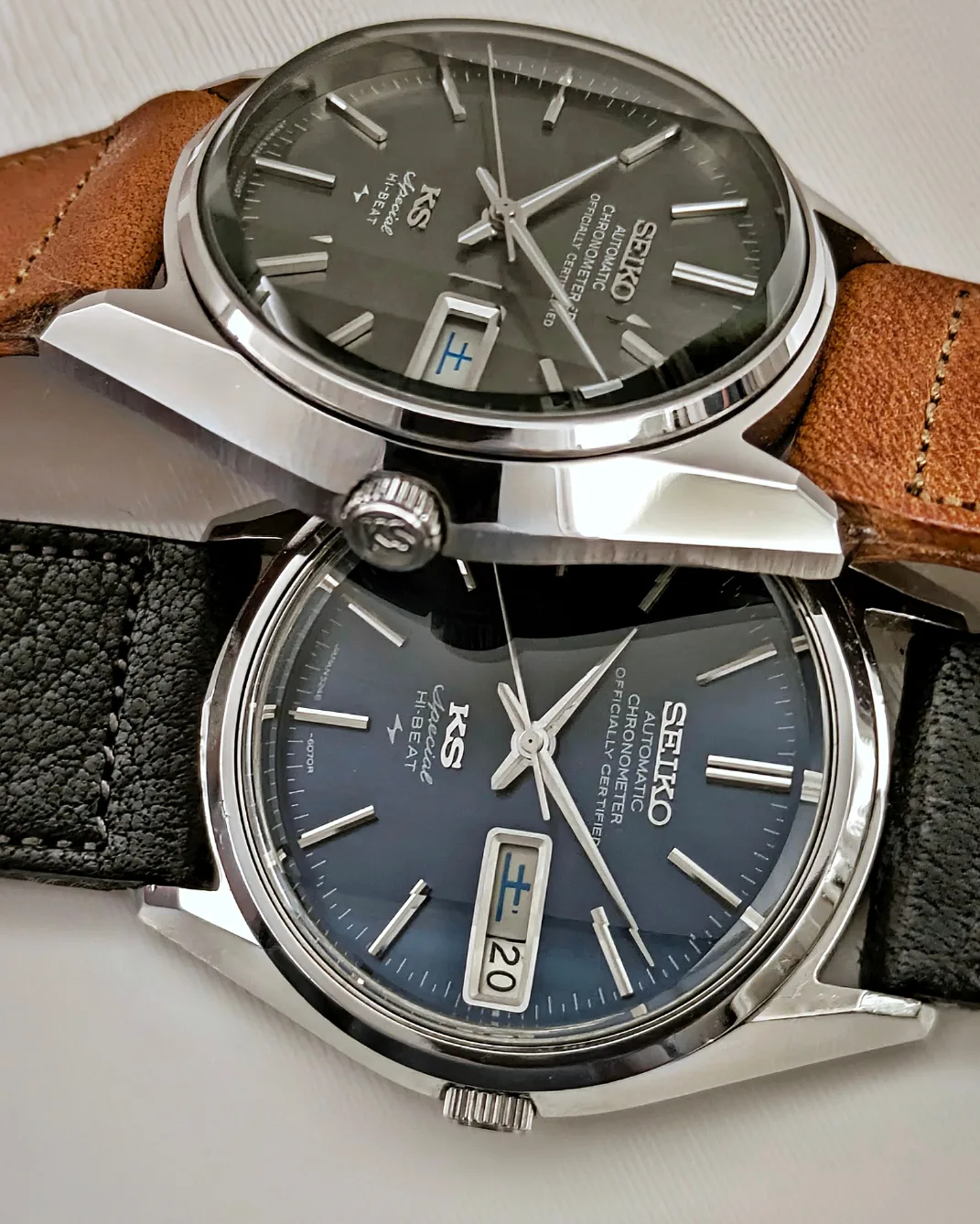
For a long time I treated the grey 5246-7000 as this watch’s differently coloured sibling. Putting them directly beside one another made the differences harder to ignore.
The grey watch has a visibly narrower bezel and a more open dial perimeter. The tiny dial code at six sits on the inner side of the minute track on the blue watch, and beyond it on the grey one. These are small adjustments, but they alter the balance of the whole face.
Both of my examples measure 34.9 mm wide and 10.5 mm thick. Equal external measurements clearly leave considerable room for different proportions inside the bezel.