King Seiko 52KS 5245-6000
The little hockey puck
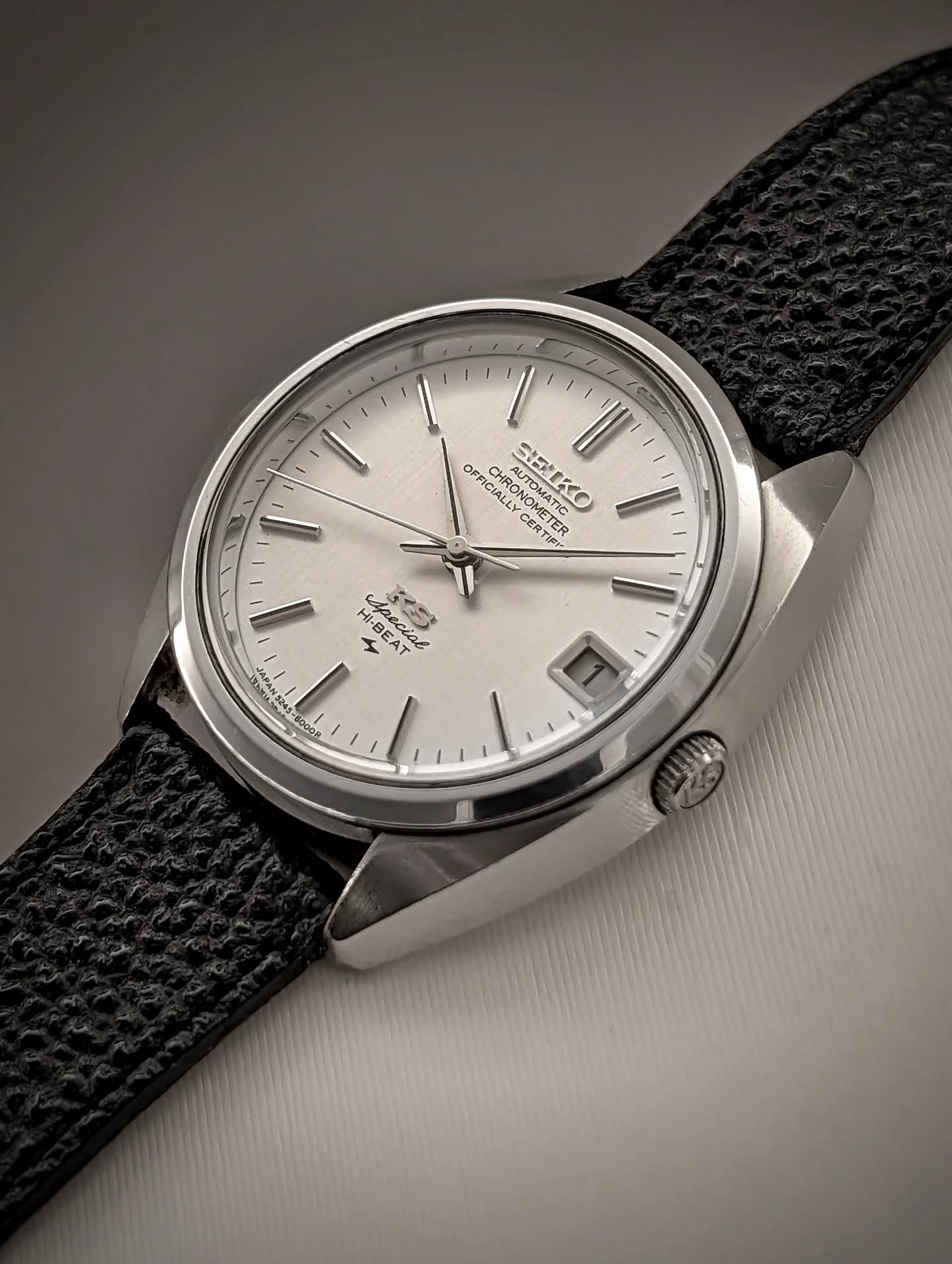
The 5245-6000 is a small watch with an unexpectedly substantial bezel. At an angle, that bright ring becomes a proper volume, sitting above a case that curves and folds towards the wrist. It is one of those watches I enjoy most in three-quarter view, where the photograph has to work rather harder than the eye.
I once called it Seiko’s little hockey puck. The nickname has stuck, although the case underneath is considerably more interesting than that suggests.
The turn underneath
The brushed underside is a particular pleasure. Its surface carries into the folds that lead up towards the case top; the back belongs to the shape rather than merely closing it. The monocoque construction makes that continuity especially easy to appreciate.
On the dial, the fine linen texture gives the light something quieter to work on. The black accents in the markers keep the hour positions distinct, while the long chronometer inscription occupies a surprisingly small part of the face. There is plenty here, but the hierarchy remains calm.
The watch
| Reference | 5245-6000 |
|---|---|
| My example | June 1973 |
| Family | King Seiko 52KS |
| Manufacture | Daini Seikosha |
| Movement | 5245A · automatic, date |
| Beat rate | 28,800 vibrations/hour · 4 Hz |
| Case | Stainless steel |
| Case width, without crown | 35.5 mm |
| Thickness, including crystal | 9.5 mm |
Dimensions measured on this example.
A complementary pair
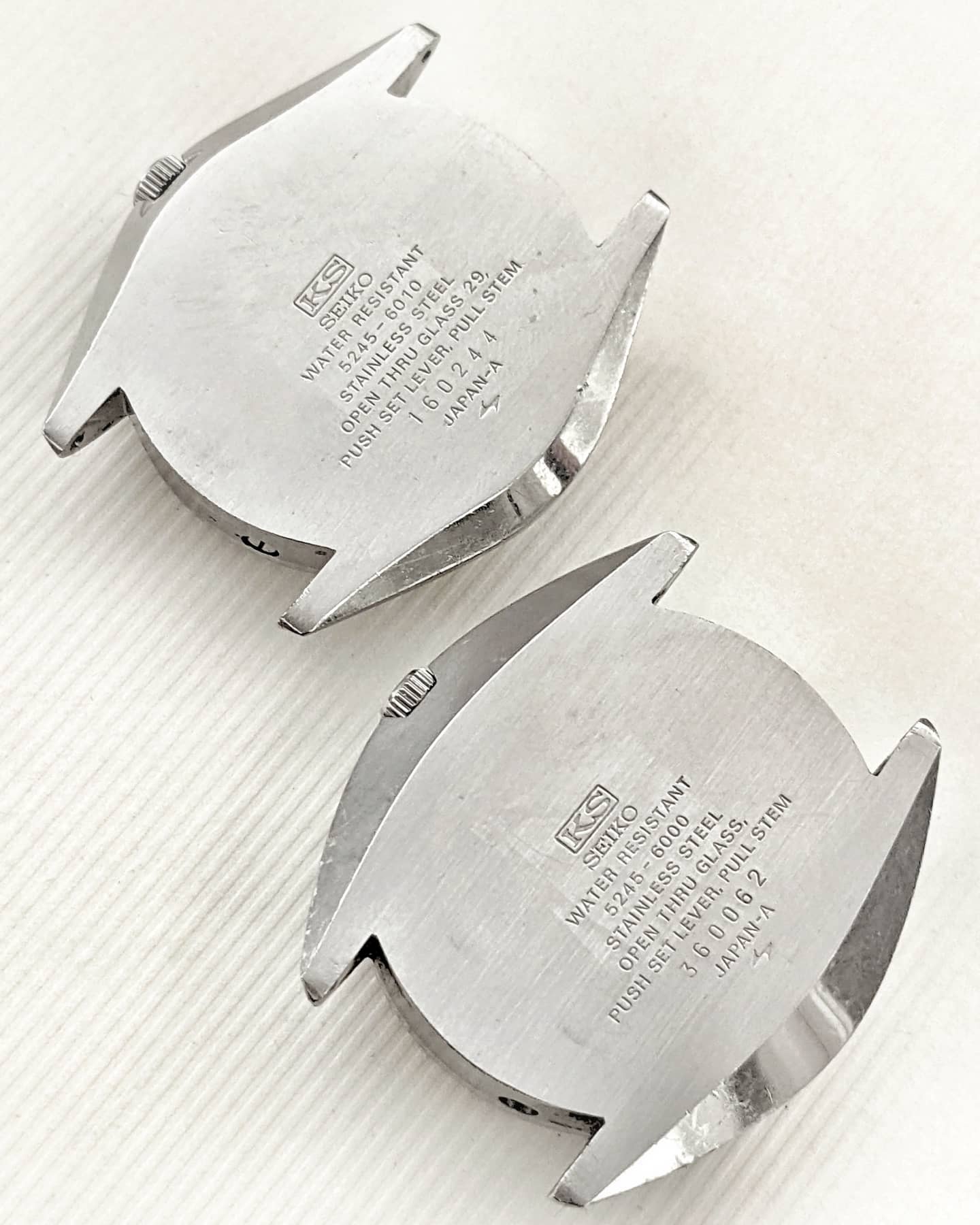
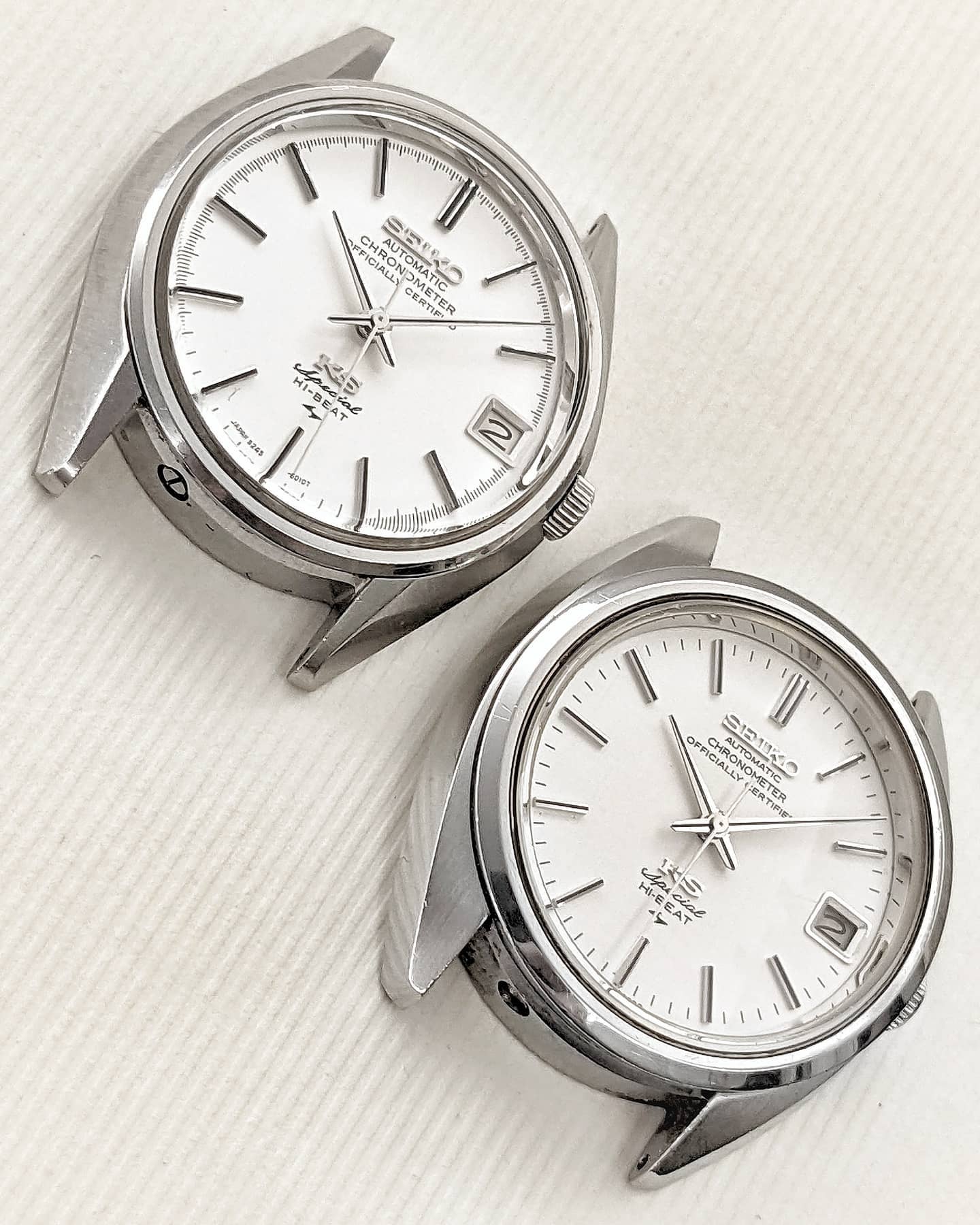
Beside the 5245-6010, the 6000 becomes more obviously round and full. The 6010 is finer at the lugs, with a sunburst dial and a much leaner outline.
The finishes make the comparison particularly satisfying. The 6010 has brushed flanks and polished lug tops; the 6000 reverses that relationship. Even their backs continue the conversation between curves and countercurves. I find them unusually convincing as a pair.
The same size, another shape
My 6000 measures 35.5 mm across and 9.5 mm thick. The 6010 is only 0.6 mm narrower and has the same measured thickness. Those small differences are useful context: most of the contrast comes from the way the metal is distributed around the dial.